
Lessons: Malachi 3:1-4; Philippians 1:3-11; Luke 3:1-6
Advent is a season of preparation for the coming of the Lord. Last Sunday I wrote about three Comings – of Jesus at Christmas, of Christ at the end of time and the coming of Jesus the Christ to us on each and every day. This week I am going to explore how the Lord, who we are expecting, might not be quite like what we have been taught or thought. To experience this every day coming, we need to be open to changes.
When a parish vacancy occurs in the Anglican Church of Southern Africa, the Bishop asks the parish to provide a Parish Profile so that possible candidates can see what they are letting themselves in for if they should be appointed. The preparation of this profile is a good exercise for the parish because they have to do a bit of self-examination and reflection. They have to say what their dreams about the parish are, and say what they think the parish needs to fulfil its God-give task. I saw on a US Lutheran church site[1] that they had a multiple-choice type questionnaire. This helps those filling in the form to go into areas they might want to avoid, areas such as theological requirements and pastoral needs in a parish. One of their questions asked about the pastoral attitude of parish and they had to choose between:
We focus on ideas and beliefs. We focus on skills and action.
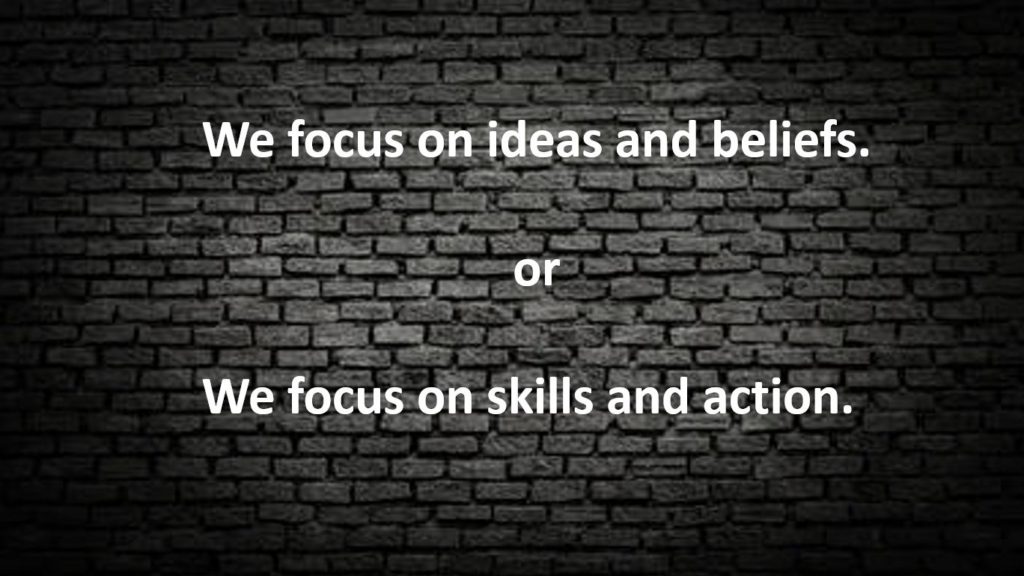
I think in Advent this is a good question for all of us to think about. In our faith, do we focus on ideas and beliefs? Are we happy to exclude some people because the Church dogma has taught for centuries that they do not belong… for example, do we condemn people who perhaps are finding it more and more difficult to confidently say the Creed each Sunday? Or are we more focused on skills and actions which make a difference to our community and wider society? What do you think the Christian faith is all about? Is it following creeds and dogmas or living lives with actions that make a difference for good?
The Philippians reading for this 2nd Sunday of Advent shows what I think is the right approach. Paul begins his letter to the Philippians with the basics:
- the one who began a good work among you will bring it to completion by the day of Jesus Christ. [v6]
- that your love may overflow more and more with knowledge and full insight to help you to determine what is best having produced the fruit of justice that comes through Jesus Christ. [v9]
What is Paul emphasizing here? Ideas and beliefs, or skills and actions? Ideas and belief certainly are included in “knowledge and full insight,” but these are means to an end, means to action “to determine what is best.”
There are many churches who place an emphasis only on ideas and beliefs. Members are told to that if they believe a list of things, they will be “saved”, be able to go to heaven when they die. Biblical studies over the last few centuries have shown that the New Testament paints a different picture: Jesus came to save us from our fallen way of being human — to save us from falling into tribalism, fear, and violence. These are what prevent us from fulfilling our roles of helping God the Creator to care for one another and for the whole creation.
I’m a Church Historian and I was taught how the Church and the Roman Empire were in partnership and both grew in power and wealth because of this partnership. Over the past 50 years the concept of this sort of “Christendom” has been coming to an end. By “Christendom” I mean the partnership between the Church and Empire and by Empire, I mean the governing powers of this world. The imperial ways of doing things are still alive and well, but they are separating themselves increasingly from the church — except those wings of the church that continue to cling to the old partnership.
A few lines above I wrote that Jesus was saving us from tribalism, fear and violence. Those last two we all know but what did I mean by tribalism? I notice that the ANC seems very fearful of tribalism (that is rivalry between Zulu, Xhosa, Sotho Tswana etc) somehow interfering in its policies and membership. But that is not the tribalism I’m thinking of. Tribalism I’m thinking of is the ‘group-thinking’ type of tribalism. The sort that says, “We must all behave and think the same way in order to be safe.” This kind of tribalism is found in empires of all sorts. Empire is the epitome of tribalism on a grand scale, defining who’s in and who’s out, who’s friend and who’s enemy, who’s in power and who’s not.
The Good News of Jesus the Messiah is decidedly different. It is a healing option to Empire, turning upside-down and inside-out Empire’s boundaries. The best Gospel writer to demonstrate this upside-down-turning is Luke, the Gospel we use in Year C (from Advent 2021 through 2022). Just a few examples prove this:
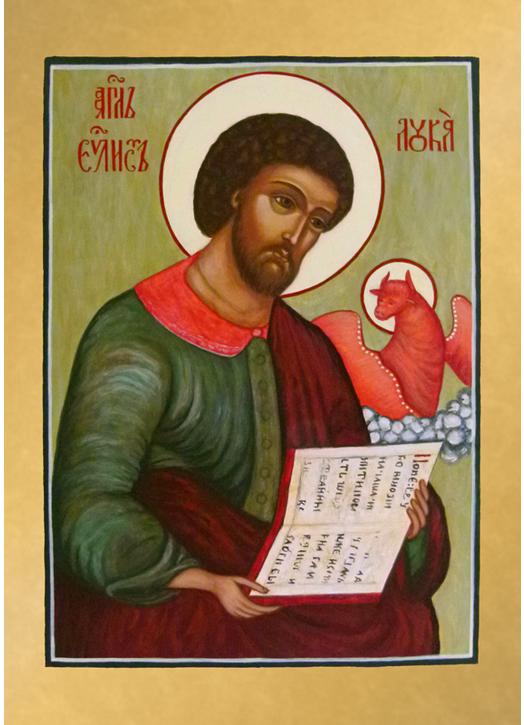
- Luke 1–Mary’s song– “He has brought down the powerful from their thrones, and lifted up the lowly; he has filled the hungry with good things, and sent the rich away empty.”
- Luke 4–Good news for the poor
- Luke 6–Blessed are the poor; cursed are the rich
- Luke 13:30– “Indeed, some are last who will be first, and some are first who will be last.”
- Luke 15–Heaven rejoices when the lost are found
- Luke 16–Lazarus dies and lives with the patriarchs; the rich man [Dives] ends up in Hades.
- Luke 22–The Gentile kings lord over others; Jesus is the Messiah who serves.
Jesus the King brings a different style of politics, politics that are upside-down inside-out from what we see in the nations of the world still today.
If you look at the opening few chapters of Luke you will see that twice he gives us the list of rulers at the time: at the beginning of the Christmas story and at the beginning of Jesus’s ministry in today’s Gospel — “In the fifteenth year of the reign of Emperor Tiberius . . .”. Are these lists of rulers simply Luke being the historian that he is? Or are they there to show how Jesus comes to be a totally different king? One commentator I read points out that imperial pronouncements were called euangelion which the Greek word for Good News and these imperial pronouncements would begin by making sure everyone knew who their rulers were by listing them. Luke is using the empire’s format of announcing Good News to proclaim a distinctly different Gospel!
If we view Christendom as shared power between Church and State then it is good that it coming to end, but this ending is evolutionary not revolutionary. This is why the authoritarian options of tribalism can still sound good to many people and it can be uncomfortable to stand in the breach of a great change-point in history.
What does this mean for the church? It means a re-examination of our faithfulness to Jesus’ Gospel. As we read scripture each week we do so with different glasses on. And then we must question some of our basic ideas and beliefs, things like a wrathful, punishing God; concepts of hell and heaven; the idea of the violence of God; the politics of human power in light of the power of a crucified God. Above all, we examine our practices, our skills and actions. And we must ask: ‘Are they about love?’
One of our most basic practices is our worship. Does our worship welcome the stranger, or define us over against the stranger? Are we excluding some, not making them welcome because they don’t belong to ‘our tribe’?
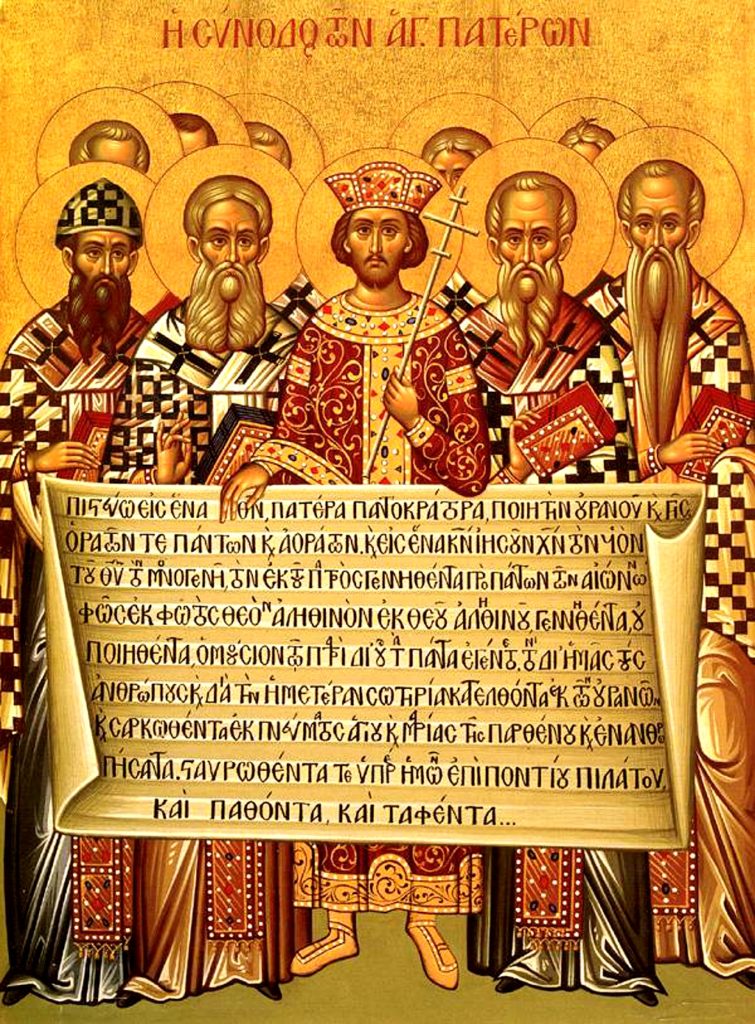
When I came to Simon’s Town Parish, they didn’t regularly use the Nicene Creed, only the Apostles’ or Baptism creed was used. I left things as they were because as a student of Church Historian, I had learnt that the creeds correctly state some of our basic beliefs, but they also have a history of practice. The creeds were first started to be used when Christendom – that partnership between church and state – was forming. Earlier creeds were more fluid and diverse. The story of the Nicene Creed, however, is one of violent Empire-building: the aftermath led to the execution of two bishops and exile of a third. The creeds have been used during Christendom as a way of forcefully maintaining clear boundaries between them and us.
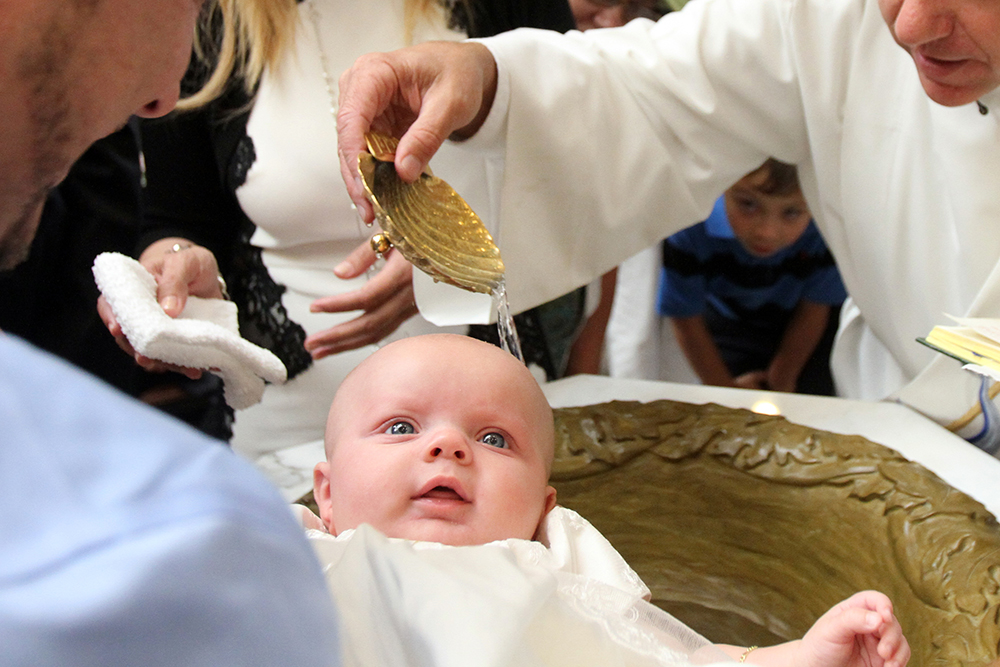
When I was rector of St Paul’s, Rondebosch there was a continual procession of Nigerian parents bringing their children for baptism. Some parish have very strict rules about who can be baptised and who can’t. Being a pledge-giver is often the major criterion. To me baptism is a welcome into God’s worldwide family. It does not define the Christian family tribalistically over against other religions and cultures.
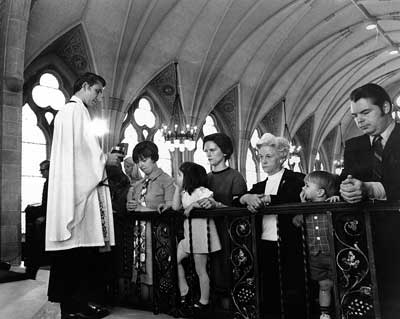
I remember, too when at Synod and they were debating whether to allow children to be admitted to communion before confirmation. Someone said that children should not be allowed to receive because they don’t understand its meaning. The synod president was Archbishop Desmond Tutu who said that he didn’t really understand its meaning either, but he knew he needed to receive it. Bp Charles Albertyn also responded by saying that when a mother and child came forward to the altar rail, the mother for communion and the child for a blessing, the child, copying mom held up her hands to receive, only to receive a clip across the head from mom who said loudly to her, “No! Bad for you!” Communion should have no boundaries by denomination or age.
The bottom line is that we must practice our worship and sacraments in ways that break down the barriers that divide us. Otherwise, we are practicing religion in ways that maintain the structure of Us and Them; we continue to be carriers of the disease of tribalism instead of agents for healing and love. It means changing, changing our thinking, changing our actions.

The Malachi reading this Sunday speaks to us about the “refining fire”[3:2]. As one commentator puts it “A Refining Fire is an impulse, a creative energy given to us by God, in a context of choice: we can choose to do justice out of love, or we can choose to be violent out of pain”[2]. “Refining fire” make me think about T. S. Eliot’s poem Little Gidding[3]
The only hope, or else despair
Lies in the choice of pyre or pyre
To be redeemed from fire by fire.
Thinking of our world, thinking about the church, we often experience despair… but by being ready for the Coming of the Lord means being ready for change. As we do Advent, we, like John the Baptist, must be the ‘refining fire’ which gives all people hope and redeems us all from the fires of despair.
Some ideas developed from a sermon by Pastor Paul Nuechterlein of the Lutheran Church of the Savior, Kalamazoo, MI. December 9, 2018 http://girardianlectionary.net/reflections/year-c/advent-2c-sermon-notes-2018/
[1] http://girardianlectionary.net/reflections/year-c/advent-2c-sermon-notes-2018/
[2] Cheryl Kirk-Duggan, Refiner’s Fire quoted in Pastor Paul Nuechterlein’s sermon.
[3] T. S. Eliot, Collected Poems 1909-1962, London, Faber & Faber, 1963, p. 221