Carol of MY year 2024 –

Introduction

Over the past three years I have written a blog about a carol that attracted me in that year’s preparation for Christmas. Two years ago, it was ‘What sweeter music’ (words by Robert Herrick and music by John Rutter.) Last Christmas it was ‘Tomorrow shall be my dancing day’ words by that great poet ‘Traditional’ and music by John Gardner.

This year I had a bit more time to experience various carols as I was asked to do a parish faith-sharing series called ‘Faith and Music’ at St Stephen’s Pinelands and the December meeting was entitled ‘What sweeter music… than a carol.’
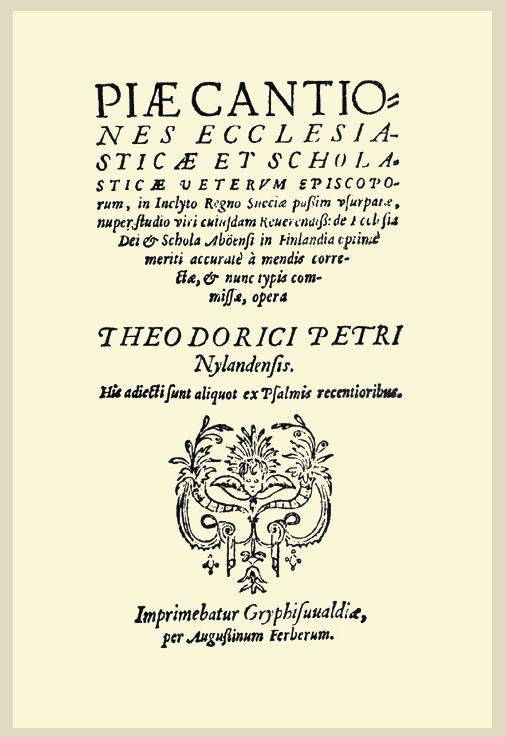
Cover of Piae Cantiones 1582

Why I chose it…

I started watching YouTube videos of Carols and histories of carols to give me a springboard for the presentation. I came across Jeremy Summerly’s various ‘Christmas Lectures’ videos for Gresham College. It appears that he has given an annual lecture on various aspects of carols and music for Christmas for many years now. One of these lectures discussed the 450th anniversary of the publication of Piae Cantiones Ecclesiasticae et Scholasticae Veterum Episcoporum (1582). The title can be basically translated as ‘Pious Church and Scholastic Songs of the Venerable Churchmen’

This publication was from Finland and collected by a Finnish schoolmaster Theodoricus Petri Rutha of Nyland, who taught at the Cathedral school at Turku, Finland. It contained seventy-two songs mostly with just a melody line. It has become a source of many carols and hymns with modern composers arranging the harmonies for us to use today in our worship. In our Hymns Ancient and Modern New Standard we find two hymn tunes sourced from this publication. The tunes are for the hymn ‘Of the Father’s love begotten…’ and secondly, a tune called Personent Hodie used for modern words ‘Long ago, prophets knew…’, an Advent Hymn.

Among the carols are ‘Up!  Good Christian folk and listen’ with the words by G. R. Woodward but the melody adapted from Piae Cantiones, and ‘Good King Wenceslas’ with words by J. M. Neale and the music was that for a Spring Carol also found in Piae Cantiones.

It is amazing how one book of tunes from an obscure town of Turku in Finland and collected by a schoolmaster has played such an important role in English hymns and carols. One of the tunes written out in harmony but only for the chorus (not the verse) of the carol I’ve decided to make ‘My Carol for the Year 2025’ mainly because researching it for my Faith and Music presentation at St Stephen’s Pinelands early in December has opened so many doors for me on the history of carols.

MY carol for 2024

The name of the carol I’ve chosen is ‘Gaudete’ [Rejoice]. In my introduction to the Faith and Music presentation I was trying to define what a carol was. The Oxford Book of Carols defined Carols as being ‘simple, hilarious, popular and modern’. These terms need a bit more explanation:  

Simple – this implies that a carol should be spontaneous and direct in what it says to us. This often leads to them rambling on like folk-ballads tended to do.

Hilarious – this is a strange use of the word but an archaic meaning is ‘boisterous and merry’. This also points to the word ‘carol’ being derived from the Latin and Old French word meaning ‘to dance’. This is where ‘Gaudete’ comes in for me. With its syncopation one cannot but help feeling the need to dance when it is sung in a vigorous way (see below for examples).

Popular – this means that carols were sung by all people, not just the choir and the clergy. Most often carols were sung by the common people going from door-to-door singing carols in the wassailing tradition, usually ending up in the local pub.

Modern – With Piae Cantiones being published in 1582, this seems to be a contradiction but The Oxford Book of Carols (TOB), using rather gender-specific language, typical of its era, TOB was first published 1928. It says that carols are ‘always modern, expressing the manner in which ordinary man at his best understands the idea of his age, and bringing traditional conservative religion up to date.’

Does ‘Gaudete‘ fulfil the requirements of being ‘simple, hilarious, popular and modern’? I think it does – if one performs it in a suitable way. Here we need to look at the words and the music separately.

The words

Latin
Gaudete, gaudete!
Christus est natus
Ex Maria virgine, gaudete!

Tempus adest gratiæ
Hoc quod optabamus,
Carmina lætitiæ
Devote reddamus.
Gaudete, gaudete!
Christus est natus
Ex Maria virgine, gaudete!  

Deus homo factus est
Natura mirante,
Mundus renovatus est
A Christo regnante.
Gaudete, gaudete!
Christus est natus
Ex Maria virgine, gaudete!  

Ezechielis porta
Clausa pertransitur,
Unde lux est orta
Salus invenitur.
Gaudete, gaudete!
Christus est natus
Ex Maria virgine, gaudete!  

Ergo nostra contio
Psallat iam in lustro;
Benedicat Domino:
Salus Regi nostro.
Gaudete, gaudete!
Christus est natus
Ex Maria virgine, gaudete!
English
Rejoice, rejoice!
Christ is born
Of the Virgin Mary – Rejoice!

The time of grace has come—
What we have wished for;
Songs of joy
Let us give back faithfully.
Rejoice, rejoice!
Christ is born
Of the Virgin Mary – Rejoice!  

God has become man,
With nature marvelling,
The world has been renewed
By the reigning Christ.
Rejoice, rejoice!
Christ is born
Of the Virgin Mary – Rejoice!  

The closed gate of Ezekiel
Is passed through,
Whence the light is risen;
Salvation has been found.
Rejoice, rejoice!
Christ is born
Of the Virgin Mary – Rejoice!  

Therefore, let our assembly
Now sing in brightness
Let it bless the Lord:
Salvation to our King.
Rejoice, rejoice!
Christ is born
Of the Virgin Mary – Rejoice!  

This carol is in Latin and not macaronic, where Latin phrases are introduced into a carol in the vernacular language, as for example, ‘In dulci jubilio, Let us our homage show.’ The Latin phrases, however, are all very well-known likely to be understood easily even by the uneducated person having heard them regularly in the liturgy. Thus, it is simple and popular and the music (see below) makes it hilarious and modern.

The Music

As far as the music goes, I’ve said already that the Piae Cantiones had 72 melodies and very few written with harmonies. Gaudete was one of the few that did. (See picture of score, showing the score with separate parts.) Unfortunately, there is no music given in Piae Cantiones for the verses. The YouTube channel, Early Music Sources by Elam Rotem gives a very good and interesting exploration of the early sources for the chorus as well giving examples of verses used by performers. Use this link https://www.youtube.com/watch?v=Aab7TvfDEKE if you want to see where the tune first arose. Basically, a choir planning to sing today would have to find a suitable version to express the joyfulness of this carol.
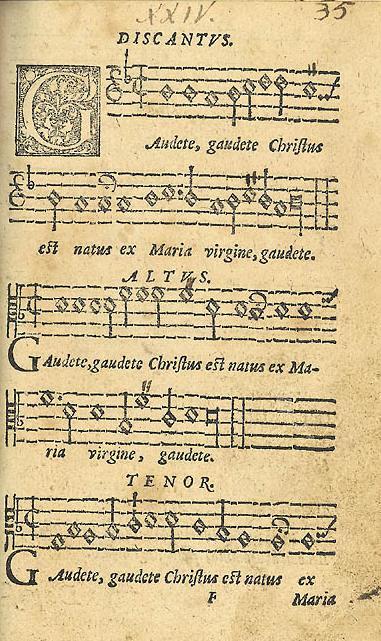
Gaudete from Piae Cantiones 1582

I was looking for a version to play for the Faith and Music group.

Version 1: In my CD collection I had a CD I bought at Portsmouth Cathedral with their choir under Dr David Price. Their version of Gaudete was arranged by Luke Fitzgerald who brings in percussion and the organ to express the celebratory nature of the carol. This is close to what I think fulfils the definition of simplicity, hilarity, popularity and being modern.

From CD Verbum Caro Factum Est Choir of Portsmouth Cathedral Director David Price (Herald CD HAVPCD407 2018)

Version 2: However, the one I chose to play to the group was a version by the British folk-rock group Steeleye Span from the 1970s and 80s. It became very popular reaching the Top40 charts – one of the only two Steeleye Span had- the other was ‘All around my hat’. This version of Gaudete has simple harmonies and the singing by the soloist, Maddy Prior and the rest of the group, has a ‘roughness’ and ‘boldness’ giving a ‘in-your-face’ feel to it.  The words are also pronounced in a ‘non-liturgical Latin’ or ‘Italianated Latin’  way making it sound more ‘popular’ – of the people, rather than ‘of the choir and educated clergy.’

Taken from one of many online Youtube videos Steeleye Span – live performance.

Which one do you like most? Which version is truly a carol? Feel free to message me in the comments.

While searching I came across a parody version entitled Crudité rather than Gaudete and if you listen carefully to the words, pre-dinner snacks are more to the fore than rejoicing over the birth of Jesus! This version perhaps uses the definition of ‘hilarious’ in its modern rather than archaic way!

Found on YouTube. Song by Blanche Rowen and Mike Gulston
My Favourite Carol 2023 Version:

Tomorrow shall be my
dancing day.

Each year as Christmas comes round and as choir members start practicing carols, one carol seems to stand out and have a particular effect on me, leading to the desire to explore the words (and music) in more detail.

A few years ago it was John Rutter’s What sweeter music, the words of which were by Robert Herrick (see https://dappergeni.co.za/wp/2021/12/17/christmas-day-reflection-what-sweeter-music-than-a-carol/ ). Last year it was ‘That Chord’ in the organ part of the last verse of O come all ye faithful by David Willcocks. (see  https://dappergeni.co.za/wp/2022/12/ )

This year it has become the exciting and very rhythmical setting of Tomorrow shall be my dancing day by John Gardner.

I think I need to look at this carol both from a musical and a text point of view.

Text
Gardener’s setting, like most others sung at Carol Services only uses the first four verses of this carol by an anonymous author.

1. Tomorrow shall be my dancing day;
I would my true love did so chance
To see the legend of my play,
To call my true love to my dance;
        Chorus
        Sing, oh! my love, oh! my love, my love, my love,
       This have I done for my true love.

2. Then was I born of a virgin pure,
Of her I took fleshly substance
Thus was I knit to man’s nature
To call my true love to my dance. Chorus

3. In a manger laid, and wrapped I was
So very poor, this was my chance
Betwixt an ox and a silly poor ass
To call my true love to my dance. Chorus

4. Then afterwards baptized I was;
The Holy Ghost on me did glance,
My Father’s voice heard from above,
To call my true love to my dance. Chorus

There are, in fact, eleven verses which describe the whole of Jesus life dealing with his temptation in the wilderness (v5), his teaching and miracles (v6), his betrayal by Judas (v7), his trial (v8), his crucifixion (v9), resurrection (v10) and ascension (v11), concluding with the whole purpose of the incarnation: … now I dwell in sure substance/ On the right hand of God, that man/ May come unto the general dance.

Perhaps I need to place this carol into an historical context. Although much older, it appeared in William Sandys Christmas Carols Ancient and Modern published in London by Richard Beckley in 1833. On the internet and on CD liners and introduction to Carol Books there has been much discussion about this carol. But first we need to understand more clearly what a carol is.

One site defined the following: CAROL (0ld French carole), a hymn of praise, especially such as is sung at Christmas in the open air. The origin of the word is obscure. Some suggest that the word is derived from chorus. Others link it with corolla, a garland, circle or coronet, in the earliest sense of the word being apparently a ring or circle, a ring dance. So perhaps we are getting close to Tomorrow shall be my dancing day…

Interestingly, Stonehenge, often called the Giants Dance, was also frequently known as the Carol; thus Harding, Chron. lxx. x.,
Within (the) Giauntes Carole, that so they hight,
The (Stone hengles) that nowe so named been.

The crib set up in the churches at Christmas was the centre of a dance, and some of the most famous of Latin Christmas hymns were written to dance tunes. These songs were called Wiegenlieder in German, noels in French, and carols in English. Strictly speaking, therefore, the word should be applied to lyrics written to dance measures; in common acceptation it is applied to the songs written for the Christmas festival.

Another internet source suggests that according to Christmas Carol legend, all old carols that were written in 3/4 time were written as Creche dances. As these carols were sung, people would dance around the creche or the manger. One of the most famous Creche songs is “Away in a Manger”.


Thus, the idea is that Tomorrow shall be my dancing day is a carol that one can dance to. “Dancing Day” in the text is a reference to the dance around the creche, or dancing on the birthday of Christ. Notice that the speaker/singer of the text is Christ. There is a suggestion that line “To see the legend of my play,” could be a reference to a mystery play and just like the Coventry Carol, this could have been derived from a mystery play. The actor playing Christ singing the verses while the audience would join in with the chorus. Sing, oh! my love, oh! my love, my love, my love, /This have I done for my true love. This creates a delightful image of Christ viewing humankind as his ‘true love’ for whom he was willing to come to earth and go through what the next ten verses describe so well.

Each line of verse one needs a brief explanation:
Tomorrow shall be my dancing day; Sung at Christmas so Christ would start dancing/ be born the next day or perhap speaking about the end of time?
I would my true love did so chance  ‘My true love’ is humankind or perhaps the church – depending on one ecclesiology.
To see the legend of my play, Legend could be story and play could be life or a hint at being part of a mystery play.
To call my true love to my dance; Christ life was to call us – humankind’ to join him in the ‘dance’

The other three verses are more directly descriptive, even if the language is a bit stilted in old-fashioned English. I have already mentioned the last line: “that man may come unto the general dance.” and how this wonderfully summarises the incarnation.

Music
I said above that carol tunes that were in 3/4 time were for dancing. The original ‘Traditional’ tune as it appears in Sandy’s Carols Ancient and Modern is in 3/4 time but in a fairly legato style. John Gardner (1917 – 2011) has written a completely different tune from the original. It has a drum and cymbal accompaniment in the opening and in between the verses with staccato chords on the organ. The verses and choruses are sung unaccompanied. The staccato and dance rhythms make it a very exciting carol to hear.

Here is the carol sung by the Portsmouth Cathedral Choir under the direction of Dr David Price. It is from the CD, Verbum Caro Factum Est: Advent and Christmas from Portsmouth from Herald HAVPCD 407.

Tomorrow shall be my dancing day by John Gardner.

Why did I like this Carol?

The use of the image of dance, of love and the idea of Jesus addressing us directly relating his life (‘dance’) to us and asking us to join in the dance, is a wonderful way of evangelising without bible-bashing and that last line of verse eleven hoping that ‘Man may come under the general dance’ — Thus ‘the general dance’ is revealed to be not only our earthly life with Christ but also the heavenly wedding banquet—as well the literal dance that may have accompanied the finale of the mystery play. The whole concept of the image of dance in religion is the next thing I need to explore!

Musically, its rhythm is what attracted me to this tune. It is vibrant and exciting and certainly makes me, not so much want to dance, but to join in the drum beats by stamping or beating time on the pew in front!

The complete text.
1. Tomorrow shall be my dancing day;
I would my true love did so chance
To see the legend of my play,
To call my true love to my dance;
        Chorus
        Sing, oh! my love, oh! my love, my love, my love,
        This have I done for my true love

2. Then was I born of a virgin pure,
Of her I took fleshly substance
Thus was I knit to man’s nature
To call my true love to my dance. Chorus

3. In a manger laid, and wrapped I was
So very poor, this was my chance
Betwixt an ox and a silly poor ass
To call my true love to my dance. Chorus

4. Then afterwards baptized I was;
The Holy Ghost on me did glance,
My Father’s voice heard from above,
To call my true love to my dance. Chorus

5. Into the desert I was led,
Where I fasted without substance;
The Devil bade me make stones my bread,
To have me break my true love’s dance. Chorus

6. The Jews on me they made great suit,
And with me made great variance,
Because they loved darkness rather than light,
To call my true love to my dance. Chorus

7. For thirty pence Judas me sold,
His covetousness for to advance:
Mark whom I kiss, the same do hold!
The same is he shall lead the dance. Chorus

8. Before Pilate the Jews me brought,
Where Barabbas had deliverance;
They scourged me and set me at nought,
Judged me to die to lead the dance. Chorus

9. Then on the cross hanged I was,
Where a spear my heart did glance;
There issued forth both water and blood,
To call my true love to my dance. Chorus

10. Then down to hell I took my way
For my true love’s deliverance,
And rose again on the third day,
Up to my true love and the dance. Chorus

11. Then up to heaven I did ascend,
Where now I dwell in sure substance
On the right hand of God, that man
May come unto the general dance. Chorus

Sources used:
https://en.wikipedia.org/wiki/Tomorrow_Shall_Be_My_Dancing_Day
http://www.hymnsandcarolsofchristmas.com/Hymns_and_Carols/tomorrow_shall_be_my_dancing_day.htm 
And numerous other bloggers who wrote about this carol

Desert Island Discs

Desert Island discs: My version!

The BBC’s Desert Island Discs has since 1942 invited a guest, called a “castaway” during the radio programme, and they are asked to choose eight recordings, a book, and a luxury item that they would take if they were to be cast away on a desert island. As they do so, the interviewer discusses with them their life and the reasons for their choices.

I have often thought about which recordings I would take. Trouble is I like so much music, how can take one piece and leave another?  To use two cliches, it is like a father having to choose his favourite child or for me to say, “My favourite piece of music is the one I’m listening to right now!”

A second question is in what order would I play them? Often on the BBC they are in chronological order of the guests’ life. I have chosen three recordings of popular music, two classical recordings and three church music recordings. So, I am going to do the recordings in that order although often I discovered them and fell in love with them simultaneously.

First Record.
Unlike my school friends I was not really into popular music as a teenager or later in my early twenties. I heard them on the radio etc but never thought, ‘That’s great. I must ask my parents to buy that seven-single.’

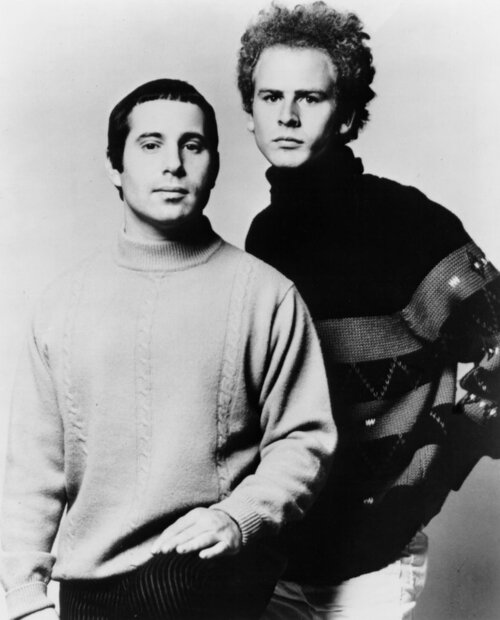
One group I did start to love was Paul Simon and Art Garfunkel. I remember buying Simon and Garfunkel’s LP Bookends and then started to try to obtain the other LP’s they had recorded earlier and I collected their subsequent recordings. Of course, I loved Sounds of Silence and Homeward Bound but often it was the one of the less popular cuts did it for me. So, my record number one would be Simon and Garfunkel’s For Emily whenever I may find her.

Simon and Garfunkel: For Emily whenever I may find her

That song tells of a dream of Emily and then waking up to find her right next to him. In my dreams I tend to experience the worse-case-scenario but when waking up it is never too bad!

Second Record.
Looking back and being more analytical in my old age, I realise that in my twenties I had become a fan of folk-rock music.

I remember dating Karen and driving home to Fish Hoek on a Saturday night after we had been to a movie or eaten out. I would drive to Fish Hoek listening to the English Service of the SABC which had on Saturday evenings 10pm to midnight, Malcolm Gooding with his programme, Going Gooding where he would play many folk-rock classics.

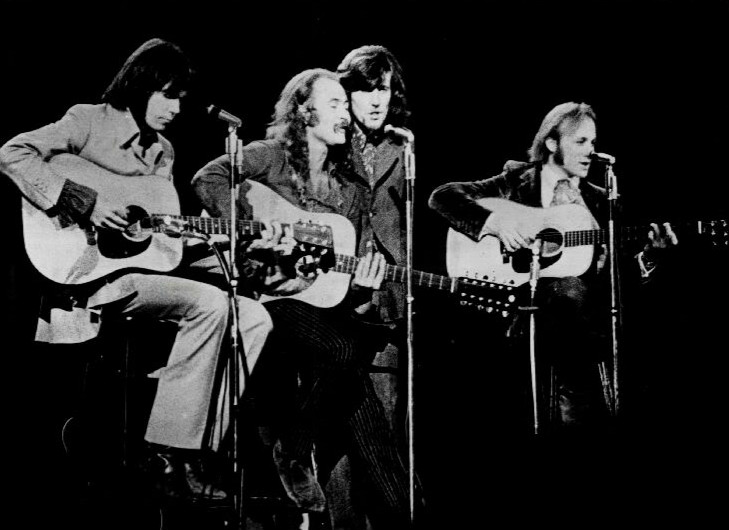
It was on this show that I first heard Crosby, Stills, Nash and Young. One song that I loved and is my second disc to take to the desert island, Suite: Judy blue-eyes. I was excited by it because it was much longer than most pop songs – 7 minutes 28 seconds long and as the title implied, it was a ‘suite’ of different section each expressing different things.

What I loved was the last section, at about 6’30” in the recording below, where the harmony-singers sing a simply do-do-do’s accompaniment to Stephen Still’s solo in Spanish.

Crosby Stills Nash and Young: Suite Judy Blue Eyes

Third Record.
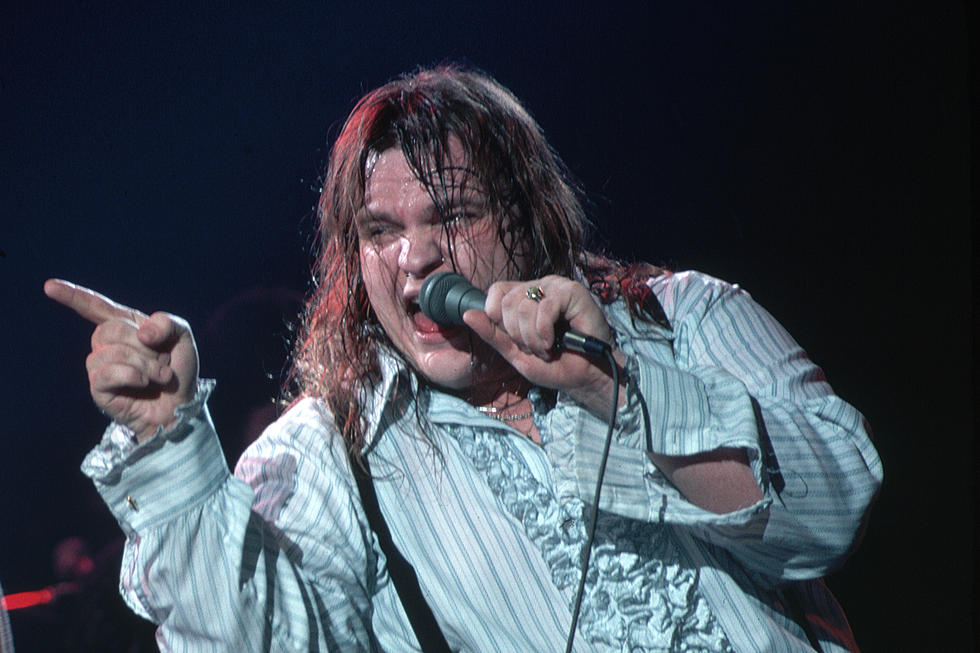
Also while in my twenties and thirties I fell for Meatloaf and his ballads sung loudly and proudly. Bat out of Hell, I’ll do anything for love, Dead Ringer For Love all of which he sang with such passion.

In my fifties I was looking on Youtube for some of his music and I came across one that I hadn’t heard or seen before, Objects in the rear-view mirror may appear closer than they are. It was a video of a live performance but it really moved me. I later found the original music-video for the song. It tells of the singer’s life experience, the death of his best friend while he was still young, the abusive relationship he had with his father, the seeking of love with an older woman. I loved some of Jim Steinman’s images and metaphors in the lyrics – ‘If life is just a highway then the soul is just a car’ (love that – must be a sermon in it!), ‘She used her body as a bandage, she used my body like a wound.’

Meat Loaf Objects in the rear-view mirror may appear closer than they are.

Fourth Record.
So onto my classical musical choices.

At School I once gave an English oral on Gilbert and Sullivan and the English Master, Mr Alf Morris (‘The Kid’) suggested that I should listen to some other classical composers such as Beethoven or Brahms.

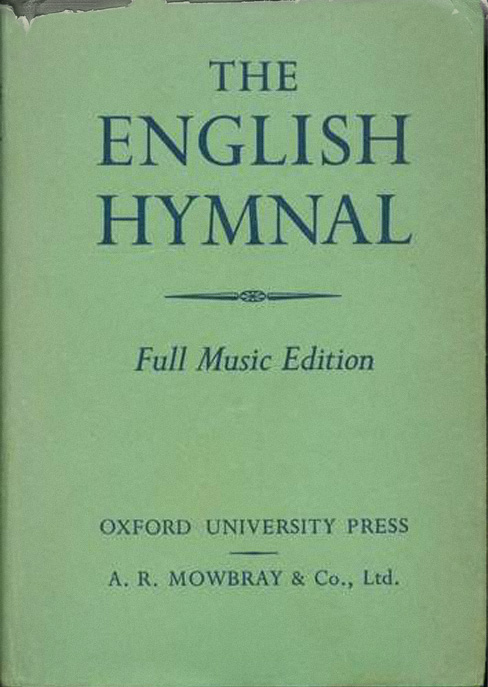
Later while in the church choir I discovered that the composer of my favourite hymn was Ralph Vaughan Williams and that he had written lots of symphonies as well as other non-Church music. One of those other orchestral pieces was Fantasia on a theme by Thomas Tallis. The theme Vaughan Williams used was in fact a hymn tune he had included in the English Hymnal (Tallis’s Third Mode Melody). So there was a connection to my church choir days.

This piece by Vaughan Williams is nearly always on the ‘Most Popular Classical Music’ List – perhaps not as high as his Lark Ascending but I loved its broad expansiveness. One record sleeve said that this piece was the embodiment of the English countryside. I disagree – I think it is the embodiment of the English Cathedral. The melodies soar up to the Gothic vaulting and echoes and re-echoes around the wonderful spaces that are the English Cathedrals.

Ralph Vaughan Williams: Fantasia on a Theme of Thomas Tallis Leonard Bernstein and the New York Philharmonic Orchestra

Fifth Record.
When I met Karen, she was already singing in the Cape Town Symphony Choir and she persuaded me to join. Every June, the last concert of the series, the CTSO played the Beethoven First and Ninth Symphonies. I had bought miniature full scores of both these and had great fun following from the Choir benches until the last movement when I felt obliged to use the vocal score like everyone else.

In the last movement the ‘Ode to Joy’ theme is first played by the cellos and then the violins take over the melody but the part I loved was the bassoon which seemed to go off on a walk-about playing a countermelody. I loved it but, on most recordings, it is hard to discern. In live concert I might have heard it more pronounced because the bassoonist sat just in front of us, the tenors in the Cape Town Symphony Choir.

I am not going to play the whole nearly 24 minutes of the last movement but merely the cellos with the melody and then the section I described above with the bassoon and its counter-melody.

Ludwig von Beethoven: an extract from the final movement from Symphony Nine in D minor Op125

Sixth Record.
As I sang in church choirs all my adult life my last three recordings are going to be church music or organ music. Even as a priest I would sneak off to the choir stalls to join the choir for the anthem.

I said earlier that my favourite hymn was by Ralph Vaughan Williams. It is ‘For all the Saints’ to RVW’s tune Sine Nomine. I even loved the name of the tune! Translated from the Latin it is ‘Without a Name’. I wanted to call my house Sine Nomine as a snub to people who give their houses cheesy title.

The hymn has eight verses, the first three in unison, the next three in harmony and then ending off triumphantly in glorious unison for the last two verses.

Hymn: ‘For all the Saints’ Words: Bishop W. Walsham How Tune: Sine Nomine Ralph Vaughan Williams sung by the Choir of Trinity College, Cambridge conducted by Richard Marlow.

Seventh Record.

Karen learnt the organ, obtaining a LRSM in organ performance so I soon learnt quite a bit about organ pieces. Although Karen says playing Bach’s organ music is very satisfying, my choice of organ music for my desert island is unusual. It is Frank Bridge’s Adagio in E major.

It starts quietly with quite a disjunct melody which is added to in a fugal pattern, gradually getting louder until it reaches a climax and then dies away again to that single melody line. [Update Easter Sunday 9 April 2023 at Salisbury Cathedral in the UK. They must have known I was in the congregation as the organist played this piece before the Festal Evensong.]

Frank Bridge Adagio in E major for Organ: Christopher Herrick

Eighth Record.

Besides hymns and Psalms, a church choir is called upon to sing anthems. One of the first anthems I learnt after joining the Choir at St Margaret’s Fish Hoek was S. S. Wesley’s Blessed be the God and Father. Wesley’s anthems were often large and comparable to Cantatas. Although shorter than his other long anthems can be divided into sections just like the others. It starts with a choral-like section for the whole choir. This is followed by a quasi-recitative for the men. Then comes a sublime soprano solo and response by all the sopranos. Another recitative for men is followed by a short triumphant fugal section with words ‘the word of the Lord endureth for ever’ which ends this anthem.

Samuel Sebastian Wesley: Blessed be the God and Father Choir of King’s College, Cabridge conducted by Daniel Hyde

A book and a luxury
On the BBC the guest is given the bible and the complete works of Shakespeare but can choose another book to take to the desert island.

I would be quite happy to lose the complete works of Shakespeare if I could have the Book of Common Prayer and my other book would be The Psalter pointed for Anglican chant and my luxury would be a book of chants by ancient and modern composers.

Usually, the guest is asked which recording they would keep if a wave should wash away the another seven. This is a tough one. I think t would be a toss up between the CSNY’s Suite: Judy Blue Eyes and Wesley’s Blessed be the God and Father.

What are the eight discs you would take to a desert island? Do comment below.

George Herbert: Christmas and ‘The Chord.’

Presently Karen is a member of the Cathedral Evensong Choir as well as the Cathedral Chamber Choir. This means that this Christmas season we have had the Carol Service at 5pm on Christmas Eve and the Orchestral Mass on Christmas Day morning at 10am. As with all choirs there is a last-minute warm-up and rehearsal. We arrive at the Cathedral an hour or more before the service and I am left in the car while she goes to rehearse

This means that I have an opportunity to read while waiting. As the service times approaches, I make my way into the Cathedral. Because of the large crowds at Christmas, I went in at least half-an-hour before the service. To read my ‘whodunnit’ crime thriller in the car park is one thing but to read it in the Cathedral seems inappropriate. So I took along with me two poetry books by well know spiritual poets. 

On Christmas Eve I read some of R. S. Thomas’s poems.  Once again, it was his poem In Church which touched me. I spoke about it before https://dappergeni.co.za/wp/2021/03/18/r-s-thomas-the-east-end-cross/ when I discussed the cross at the east end of St Margaret’s, Fish Hoek.

The next day I took a book edited by Philip Sheldrake, discussing George Herbert poetry. As it was Christmas Day I though it best to look up ‘Christmas’ in the index and found this poem:
The shepherds sing; and shall I silent be?
      My God, no hymn for Thee?
My soul’s a shepherd too; a flock it feeds
      Of thoughts, and words, and deeds.
The pasture is Thy word: the streams, Thy grace
      Enriching all the place.
Shepherd and flock shall sing, and all my powers
      Out sing the daylight hours.
Then will we chide the sun for letting night
      Take up his place and right:
We sing one common Lord; wherefore he should
      Himself the candle hold.
I will go searching, till I find a sun
      Shall stay, till we have done;
A willing shiner, that shall shine as gladly,
      As frost-nipped suns look sadly.
Then will we sing, and shine all our own day,
     And one another pay:
His beams shall cheer my breast, and both so twine,
Till ev’n His beams sing, and my music shine.

Herbert uses a typical conceit of his period as he compares his soul to the shepherds ‘watching their flocks by night.’ His soul shepherds his thoughts, words, and deeds.  His sheep are feed on God’s word and watered by God’s grace. Filled with this heavenly food and drink, both sheep and shepherd sing, out singing the daylight. Their musical theme is ‘one common Lord.’  Just as the winter sun looks dull and sad so Herbert’s singing of the light will outshine the very sun and God the Son’s light shall ‘twine’ with his light, his soul making God’s beam to sing and God’s light making Herbert’s music shine.

Having read that, I sat quietly in the Cathedral then had the privilege of hearing the wonderful Mozart “Spatzen” Mass in C (K220) sung in a liturgical setting.  And, of course, the hymn/carol ‘O Come all ye faithful’ with the wonderful CHORD in the last verse ‘Word of the Father, now in flesh appearing’ which cheered my breast and my music shine.

Footnote:
“The Chord” is an unexpected change of harmony in the organ accompaniment in the last verse of “O Come, All Ye Faithful,” corresponding to the line “Word of the Father.” In the language of music theorists, The Chord is a B half-diminished seventh.  Read more about it and Sir David Willcocks contribution to choral music at:

I’ve Found My Grandad!

In January 2022 at the zoom meeting of the Cape Town Family History Society I gave a talk on the 1921 UK Census and how it seemed to give me a new paternal grandfather.  You can watch the whole talk at

Basically, the widowed Sarah BOARDMAN born PARISH married Charles PRATT on 21 June 1919.  On the 26 Sep 1919, my father, Thomas PRATT was born.  All I knew about my grandfather was that he was called Charles, was aged (according to the marriage certificate) 49 years, was living at a hostel for working men, Rawton House, and that his father was a mechanical engineer called Thomas PRATT and was deceased.  I also obtained Charles PRATT’s death certificate from 18 May 1924 (less than 5 years after my father was born).  His age is given as 54 years which matches the age on the marriage certificate. 

Charles PRATT was only part of my family from 1919 and had died by 1924 so it was hard to find definitive data on him.  I presumed (wrongly) that he must have come from Birmingham or the Midlands as ‘people, especially poor people, didn’t move about much in those days.’  I found a Charles PRATT from Birmingham whose birth year approximately matched that on Sarah BOARDMAN’s marriage certificate of 1919.  However, there was always a nagging doubt that I had the wrong man.  It was with eager anticipation that I looked forward to the 1921 Census, as this could tell me whether he was born in Birmingham or not.

The 1921 Census blew my paternal family tree wide open as it told me Charles PRATT was born in Bradford, Yorkshire and not Birmingham.  This meant starting my search for my grandfather from scratch.  I duly found a Charlie [sic] PRATT born about 1871 whose father was a ‘Steam Engine fitter’ which I suppose could be called an engineer as on the marriage certificate.  So was this the right Charles PRATT?

Following this Charles or Charley or Charlie PRATT through, I found he married a Mary Ann WILSON in July 1891.  By the 1901 Census they had three children, two girls (Annie PRATT 9y and Elizabeth PRATT 7y) and a son (Harold PRATT 5y).  I also found that Charlie PRATT was a drinker and assaulted his wife for which he appeared in court.  This assault must have made Mary Anne PRATT born WILSON decide to leave him and make her way to Philadelphia in the USA, taking the three children with her.

I then researched her and the children in the USA and found that she married Frank REGAN.  I also found Harold Thomas PRATT growing up, serving in the US forces in WW1 and marrying a Jessie KYNOCH in 1922.  They only had one son, Harold James PRATT.  He married Maria Madelaine WINTERBERGER in 1948 and had five children including another Harold, HAROLD ALAN PRATT.

I had asked someone in this family that I found if any had had a DNA test done.  He didn’t respond so I left it until a few weeks ago when I decided to delete from my family tree the other Charles PRATT from BIRMINGHAM and take a chance and enter Charles PRATT from Bradford as my grandfather.  While doing that I went to www.findagrave.com to get Harold Thomas PRATT’s date of death.  There I found that in 2018 a Harold PRATT had left digital flowers at his digital grave.  When one does this, there is a hyperlink to the person’s email.  As 2018 was relatively recent I thought the Harold Pratt who had left flowers would still be alive so I emailed him.

After some to-ing and fro-ing of emails, Harold said that he had done DNA via Ancestry.  I had done mine via Family Tree DNA (FTDNA) and thus could not upload it to Ancestry but he could download the raw data and upload it to Gedmatch.com where I had placed my DNA too.  This he kindly did.

On Sunday 22 May 2022 I check out my possible matches of DNA and to my joy I found the following


This shows that Harold Pratt (Hap) and I have 233.6 cM of matching DNA, the largest string being 54.5

The two other entries on this screen-shot are from my maternal side.  Jennifer KENNERLEY has only 97.2 cM in common with me and her daughter Julia 89.7 cM.   They are my Third Cousin (3C) and Third Cousin Once Removed (3C1R) respectively.

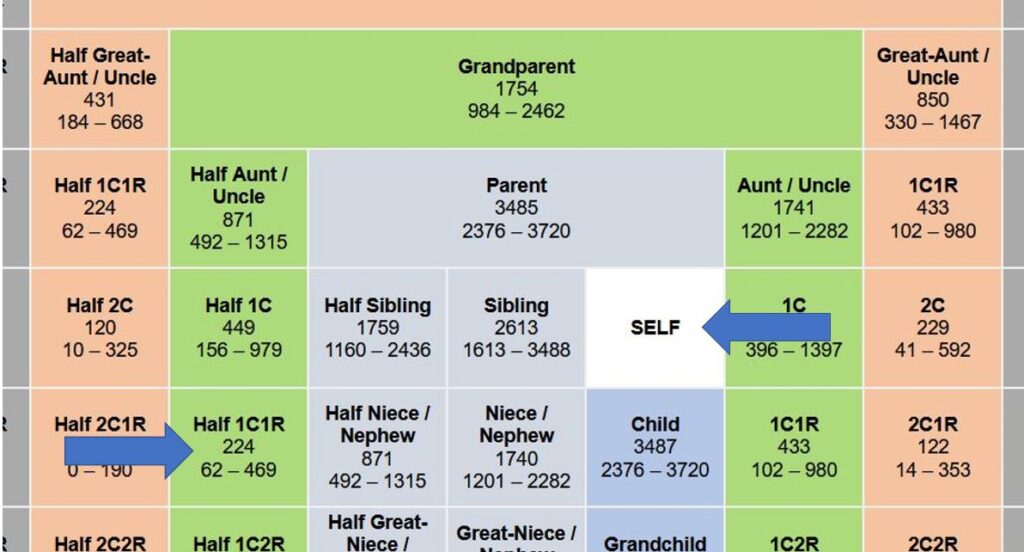
I worked out Hal PRATT’s relationship to me using https://dnapainter.com tool of projecting cM similarity.


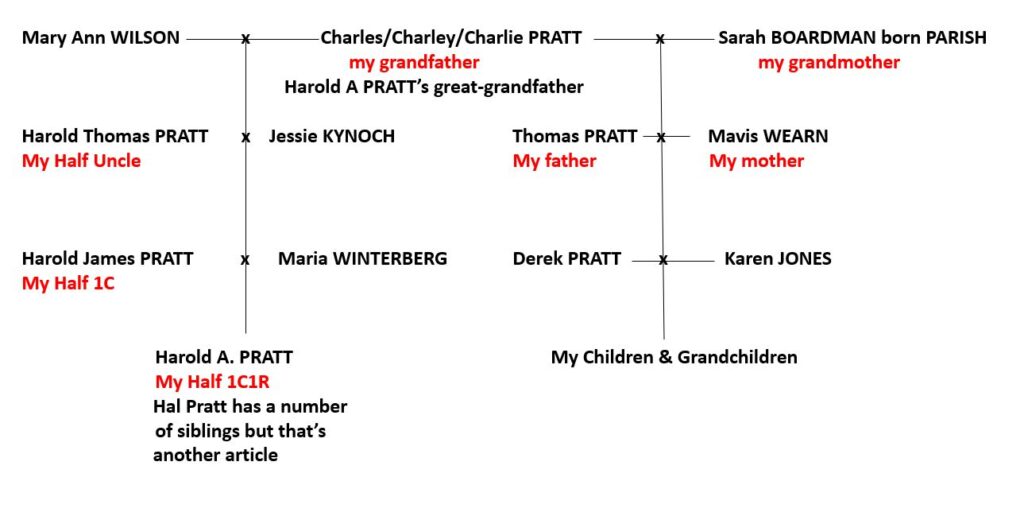
Self is me (Derek Pratt) and Half 1C1R is Half First Cousin Once Removed.  My Parent is my father (Thomas PRATT b. 1919), my Grandparent is Charles PRATT (1871-1924).  Then my half Uncle is Harold Thomas PRATT, my Half First Cousin is Harold James. His son is Harold Alan PRATT who is my Half First Cousin once removed.  Or to make it more visual 

Hal Pratt doesn’t have pictures of my granddad, Charles PRATT and nor do I.  He did comment that his great-grandmother Charles’s first wife, Mary Ann PRATT born WILSON later REGAN would get all upset when Charles name was even mentioned. 

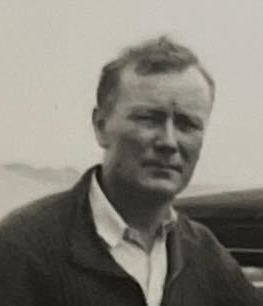
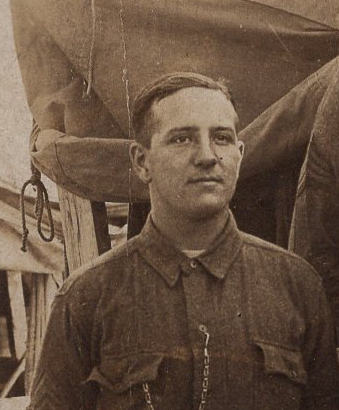
Hal kindly sent me a picture of his grandfather Harold Thomas PRATT when he joined the US Army in WW1.  I’ll put that alongside an early picture of my father.  Can you see any likeness between these two half-brothers?  Their age gap was twenty-three years.

Thomas PRATT, my father        Harold Thomas PRATT, my father’s half-brother

Poetry No. 1: Re-discovered

Poetry No 1: Re-discovered

I am busy removing old files from my computer.  Most of them are in a folder carrying the vaguely general title of ‘Church’ with numerous subfolders such as ‘Parish Council’, ‘Liturgy’ and ‘Sermons’.  Do I really need to keep all the sermons I’ve preached since 2010?  (That was the last time my hard drive crashed and I had not backed-up such items as sermons.)  ‘Maybe… You never know, I might be asked to preach on the 27th Sunday after Pentecost and I could simply lift the sermon I preached in 2011 and use that.’  But reading through such ancient old sermons you realise that most sermons are definitely time-bound.  What was happening in 2011 is not the same as what is happening in 2020 or 2021.  I say that as a historian and it is us historians who constantly say that history repeats itself!  

I remember as a server at St Margaret’s, Fish Hoek in the early 1960, I was the only server willing to serve on the third Sunday of the month when retired Bishop Basil Peacey used to be the celebrant and preacher.  I loved serving for him at the Eucharist because he was so High Church Anglo-Catholic.  Genuflecting at what I now know through Ritual Notes1 to be the right places, saying the Last Gospel (genuflecting at the words ‘made flesh and dwelt among us’, of course!), doing the preparation from a printed card which included a confession and the saying the antiphon I will go unto the altar of God : even unto the God of my joy and gladness.  Oh, it was so exciting and colourful and rebellious among the rather staid broad-church congregation of St Margaret’s then!  I must admit that his sermons were long and hard to follow because he spoke in such the strange modulating tone of a very old man.  I wonder how old he was?  He was made a deacon in 1913 and let us say he was 25y old then that would make him born 1888.  In 1966 he would be about 78y!  During the Preparation he was so hard to follow as we servers knelt on either side of him.  Fortunately, we only had to say something after he had beaten his chest at the confession so we could catch up at that point.  One Sunday after the service, as I was clearing away the sacred vessels and setting up the tray for the next Eucharist on Tuesday morning, Bishop Peacey was disrobing and he took his sermon notes and tore them up and threw them into the wastepaper bin.  “This is where most sermons belong” he said smiling at me as he did it.

While talking about Bishop Peacey, I feel should mention two other things.  The first is personal and occurred when I was in Std 8 (now Grade 10).  I was sixteen years old.  He said to me.  ‘Young man, have you ever thought about becoming a priest?’  I was at that time into the Anglo-Catholic novels of authors such as Ernest Raymond (Tell England, My Brother’s Keeper etc.)  and Compton Mackenzie (Altar Steps) and I had thought how wonderful it could be if I could become a priest and celebrate the Communion as Bishop Peacey did, with bells and smells and all the ceremony and the choir singing the setting by John Merbecke.  I feel that I had reached heaven!  So, I answered, ‘Yes’.  ‘How is your school work,’ the Bishop asked me.  I told him my not-so-good marks.  He responded, ‘If you want to become a priest you will have to work much harder!’  I cannot say that his comment put me off and it certainly wasn’t what cause delay of any further exploration of my vocation for some twenty-four years, but that is another story.  I greatly admired Bishop Peacey and it was only later while doing Church History through university in the 1990s that I read Alan Paton’s book on Archbishop Geoffrey Clayton2 which speaks of Bishop Peacey’s strong pro-Apartheid views.  R. R. Langham-Carter, in his booklet on the history of the Parish of Christ Church, Constantia3 speaks of Bishop Peacey being rector there from 1941.  His wife was pro-German and he would not allow prayers to be said for those away serving in the Allied forces.  He also believed that the Constantia parish was a ‘Coloured’ parish and he asked the white parishioners to go elsewhere, though not all followed his request.  By the time I knew Bishop Peacey, some 25 years later, I saw none of this nor knew about it until my reading came across it, well after he had died.

I have drifted off the reason for writing this blog-essay.  So back to me clearing my computer hard drive.  As I was wiping off unwanted files and folders from my hard drive I came across a folder called ‘Poems’.  I re-read the poems I wrote in the 1990s, especially those I wrote while at the College of Transfiguration and the year immediately after it.  It is strange to re-read about how one felt twenty-five years previous.  I kept on thinking: “Did I write that! It’s too good! Wow!”  or “It’s too bad!  Let me destroy it!”  Most of these poems were captured in my Spiritual Journal and then typed out on my PC.  But why did this poetry writing stop in 1996?

I was thinking about this the other night when I woke up in the middle of the night.  I came up with a reason but I think there are a multitude of reasons and perhaps this is the simplest and least threatening to me.  My life as a Medical Laboratory Technologist had become routine.  Oh, yes, exciting things were happening – birth of Nick and Kate being the most important but then my decision to allow myself to hear what God was saying to me about my vocation to serve God as a priest and then the church’s acceptance of that call, put me into a transitional zone, a liminal space.  Into this space I started writing poems that expressed my feeling and emotions at that time, responding to things that were happening around me.  The first batch of poems disappeared in some hard-drive crash or other but once at College where my time was no longer routine like going to the laboratory to work and coming home again, but rather ordered in a very monastic-type of way, allowing me time to think and write, which I had to do as I was doing BTh(hons) at Rhodes University and had to produce an essay a week.  This liminal space within continued into my deacon year and up to my ordination as a priest.  Then my poetry writing ceased.  I think what happened is that I was now back into a regular routine of sermon-writing, visiting, chairing parish meetings etc. I was comfortable with it and so the discomfort of my liminal space disappeared.

Going through later spiritual journals I find plenty of recorded quotation that moved me, plenty of entries at the start of a retreat saying it would be great if I could be inspired to write a poem again.  But very few if any poems appear.

Now, at this time, the routine of running a parish has been removed from me and so I’m sitting down and writing again.  Not sermons, nor poetry, but essay-type scripts expressing my feelings and emotions in prose rather than poetry.  The academic writing of my Master’s thesis (completed in 1997) and the editorship of the Cape Town Family History Society’s Newsletter (since 2010) has perhaps resulted in me approaching writing in a more ‘academic’ way, ensuring that all quotes and references are duly foot-noted.  Not conducive to the writing of verse!

I said above that as I looked at some of my poems I thought, ‘This is much too good for me to have written, surely it is a quote from someone else.”  I’m not saying the poems are brilliant but maybe someone else might be moved by them so I’m going to place on this blog every so often a poem from my collection which I think you, the reader, might enjoy.  I will title these blog entries as “Poem No. xx”  and beside giving the verse I might need to set the context in which it was written and I’ll place in the blog entry too. 

Let me give you a taster. 
These lines were written during a Saturday Quiet Day, during the time we were sent away to meditate

In the College Garden on a Quiet Day
The sound drifts up from the valley below,
The rustle of trees, doors being opened and closed,
The ‘sprong’ of well-struck tennis-balls,
The laughter of sportsmen preparing for their match,
And above, through and gently over these….
The sound of a meandering flute being practised
somewhere in the stillness below.

[4 June 1994]

I remembered this poem some twenty years later when I joined a group of Cape Town Clergy to lecture at COTT for a week.

Then and Now
Twenty years ago,
on a Saturday afternoon,
the sound of a flautist practising
came drifting up towards the college.
It was a quiet day,
and I was wandering in the garden.
The sound touched my inner being,
forcing me to capture the moment in verse.

Tonight, staying in nearby staff accommodation
I hear the sound of marimbas practising.
It drifts up a block and a half
yet takes me back twenty years.

By tomorrow I’ll be home,
but those around me will still be here
in their same positions in the Chapel.
Silent in meditation.
It is just like it was twenty years ago,
all that has changed are the faces.

[2014.  Grahamstown]

  1. E. C. R. Lamburn. Ritual Notes (London: W Knott & Son Limited, 1964 []
  2. Alan Paton, Apartheid and the Archbishop: the life and times of Geoffrey Clayton.  (Cape Town: David Philip, 1983) []
  3. R. R. Langham Carter, Among the vineyards: the story of Christ Church, Constantia (Constantia: Christ Church Parish, no date) []

Bookmarks

It fell out of The Oxford Book of American Literary Anecdotes edited by Donald Hall published in 1981 by OUP.  This book on my bookshelf was obviously second hand and is a collection of short, often amusing, paragraphs about well-known American authors.  When I bought it I have long forgotten, most probably at some Church Bazaar or other as that is the first stall I head to when supporting such church fund-raising efforts.

I grabbed this book the other night when on my way to bed.  I had just finished reading a thriller and I thought something light, with short disconnected paragraphs would be a nice way of separating the novel I had just finished from the next one I hoped to read.  So, lying in bed I started this book at the beginning but found that reading about 17th century unheard of American authors was a bit boring so I flicked further into the book and came across Gertrude Stein and Robert Frost and it was at this point that it fell out of the book.

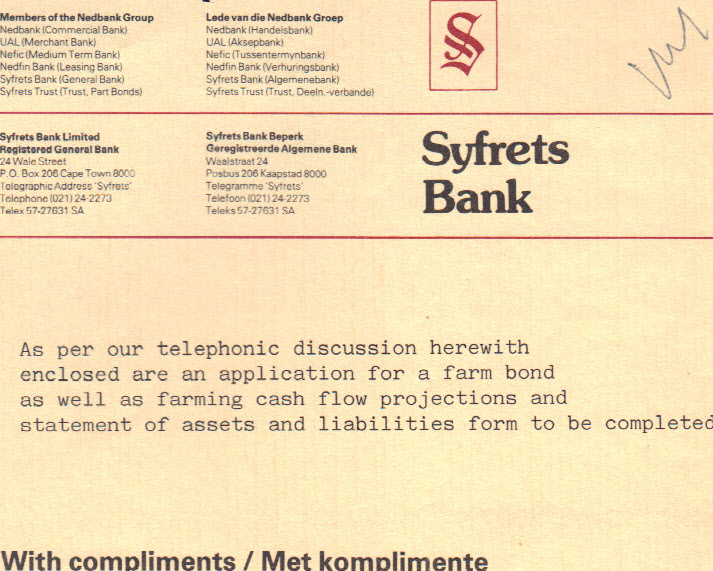
It was a ‘With compliments’ card from Syfrets Bank printed on a good quality cream paper.  Besides the Syfrets Logo and the bank’s contact information – no email yet and telephone numbers only nine digits so before the introduction of the South-African-wide ten-digit number- there was a message typed on it by an electric type writer.  A ‘With compliment’ card was and perhaps still is, a smallish piece of paper – in this case it was A6 size – which is attached to some other documents when sent to a third party.  This must have been the case for this card, because there was typed across the middle of the sheet was this note.  As per our telephonic discussion herewith enclosed are an application for a farm-bond as well as farming cash flow projections and statement of assets and liabilities form to be completed.

This stopped my reading immediately and it started me thinking about the original receiver of this note.  Was he/she a farmer in need of further funding to keep going?  Or perhaps he/she was a typical South African who felt the connection with the land and hoped, sometime in their lives, to become farmers.

In the top right-hand side of the card was a squiggle in blue ballpoint.  Was the receiver starting to fill in the form and his pen wasn’t working as well as he hoped and so he placed the squiggle on the nearest available piece of paper in this case, the ‘With compliments’ card?

When did this card become merely a bookmark?  This was by no means been the first time that I have come across the weird and wonderful items used as bookmarks.   As a lover of second-hand books bought at church bazaars, charity bookshops or posh rare bookshops, I am fascinated by these accidentally left behind bookmarks. 

The first ones I remember was when I signed up to the South African Navy (to avoid being sent to do National Service in the Army).  I was issued with a loan book, The Seaman’s Manual.   In the book, unbeknown to the storemen who issued it to me, was an envelope containing a collection of black-and-white photographs of a group of young men, presumably national service men, who were part of the crew of a ‘Ton’ class minesweeper.  When I left the navy and handed back my Seaman Manual, I kept those photos thinking that maybe sometime in the future I would find the owners.  Looking through my numerous box-files of personal memorabilia today, I could not find the photos.  Perhaps when downsizing to retire I threw them out thinking that the young men in the photos, if still alive, would be well into their seventies.  I wonder what they did with their lives after leaving the navy.  Did they end up as rich and successful?  Or did they die young?

In one book I found a bookmark which was dry-cleaners slip.  I wonder if the person ever picked up that suit that was being cleaned.  Bus and train tickets also make excellent bookmarks and as I come across them and see that the book in question must have been read on a train trip between Ilfracombe and Exeter. I wonder if they saw a murder as Miss Marple’s friend did in the Agatha Christie novel The 4:50 from Paddington?  

By far the most common bookmarks I have found are the stubs of airline boarding passes.  In the past when booking in, manually of course in those days, you received a stiff card with the end stub easily detachable.  When going through the boarding gate the official would tear of the bigger section and leave you with the stub which gave you your seat number.  Once seated the traveller would start reading a book, perhaps bought at the airport bookshop, and use that ticket stub as a bookmark.  I am usually rude about great big thick novels which travellers seem to buy to read on the flight and perhaps on holiday and because they have paid so much for it they cannot merely throw it away.  They bring it back home and put the book, with the boarding pass stub still in it, on their bookshelf and later when asked for a donation for the church bazaar, off the book with boarding pass stub goes to be sold to people like me.

Another thing that I find fascinating with second hand books is something that book dealers hate, the message from the person giving the book to the receiver of the gift.  Bookdealers hate it because it reduces the value of the book but I love them because I can then imagine all sorts of adventures the unknown named characters partook in.  Some are very personal and vaguely mysterious which enables people like me with vivid imaginations to fabricate all sort of stories to fit the message.  Others unfortunately are boring merely saying ‘Happy Birthday, Dad, love John.’

The Oxford Book of American Literary Anecdotes had a simple message: Johannesburg Aug 84.  To Patrick, love Moggily.  I wonder if it was Patrick was planning to buy a farm?  I wonder if he ever did?