
THE NATIVITY OF OUR LORD AND SAVIOUR JESUS CHRIST
I had the privilege of being asked to preach on the First Sunday after Christmas at St Stephens, Pinelands. One of the hymns I choose was Where is this stupendous stranger from a pome by Christopher Smart. It is not a well-known hymn in our parish so I introduced before we sung it.
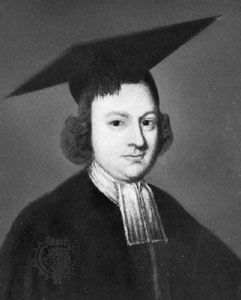 Our gradual hymn this morning is 527 in the red hymn book but before we stand to sing it, can I introduce it to you. I’m not sure if you know it at all. The words were written by Christopher Smart, an 18th Century poet and academic. He ended up in mental institution and reading his life story on Wikipedia you will see he frequently would suddenly start preaching in the middle streets or in parks in London which forced his father-in-law to have him committed. It was believed that he wrote this hymn while in the mental institution. As you sing this hymn, do look at the wonderful poetic techniques he uses – alliteration O the Magnitude of meekness and stupendous stranger and his expression of amazement that God is incarnate in the form of a baby – if eternal is so young.
1 Where is this stupendous Stranger?
Prophets, shepherds, kings, advise!
Lead me to my Master’s manger,
show me where my Savior lies.
2 O most Mighty, O most Holy,
far beyond the seraph’s thought,
are you then so mean and lowly
as unheeded prophets taught?
3 Oh, the magnitude of meekness!
worth from worth immortal sprung!
Oh, the strength of infant weakness,
if eternal is so young!
4 God all bounteous, all creative,
whom our sins could not dissuade,
you have come to be a native
of the very world you made.
[Unfortunately, this is the only version of the hymn I could find set to the tune Haron Holgate and the words sung here differ from what appear in our hymn book – given above.]
Sermon
We have just sung Where is this stupendous stranger? Prophets, shepherds, Kings, advise: lead me to my Master’s manger. It is obvious that Christopher Smart was talking about the Baby Jesus. Why does he call Jesus Stupendous? Well, according to the dictionary Stupendous means ‘something to be wondered at something amazing; something marvellous, prodigious; amazingly large or great.’ There is a slight contrast here, isn’t there.
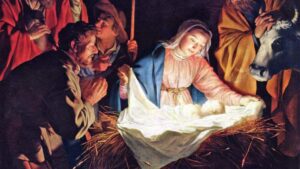
This stupendous person is a tiny baby, but we know who he is, we know what he taught and how he lived when he grew up, don’t we? But why then is Christopher Smart calling him a ‘stranger’? It is a flash back to what you most probably heard at the Christmas services on Thursday. It refers to John’s gospel the opening of chapter one and that lovely passage, In the beginning was the word. Further on it say He [the Word] was in the world, and the world came into being through him; yet the world did not know him. He was stranger to us living in this world in spite of what the prophets said, in spite of the shepherds coming to the manger, in spite of the three foreign wisemen also coming with their gifts.
So where is this Stupendous stranger? Well, our gospel reading this morning tries to answer that question. It gives three answers. The first, is where Jesus isn’t. He is not still in that manger in Bethlehem. Having been warned in a dream, Jesus, Mary and Joseph and the wee donkey made their way to Egypt. What is interesting, is that tradition says the family went via Rafah and across the Sinai dessert. If the name Rafah sound familiar, it is because today, Rafah is one of the few entry points for relief columns to bring goods into the Gaza strip.
As I  mentioning Gaza, we are reminded of devastation, the pointless killings that has gone on in Gaza over the past two years and it brings me to the second part of the Gospel story which is Herod’s response to the wisemen who did not tell him where the Holy Family were in Bethlehem. What ended up was a very angry Herod killing all the children livi
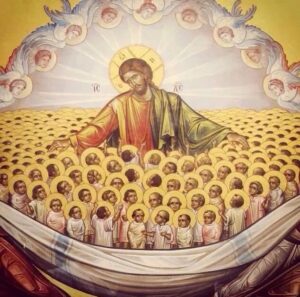 ng in Bethlehem who were under two years of age.
The third part of our Gospel this morning occurs after Herod had died and an Angel of the Lord tells Joseph to take the Holy Family back to Israel. Because Herod’s son, Archelaus [Arc-e-lay-us]was ruling over Judea, Joseph was fearful, so he took his family to the district of Galilee and the town of Nazareth.
I was going to say that these are three lovely little episodes in Jesus’ life but the middle one, what is called the slaughter of the Holy Innocents – whose Feast Day is actually today the 28 December – is anything but lovely. However, each of these episodes deserves a sermon of its own. Now don’t worry I’m not planning to do that.
One thing I did noticed and I am sure you noticed too is that each episode, the flight to Egypt, the massacre of the children and the return to Nazareth has a prophecy from the Old Testament added by Matthew as a indication that what was happening in Jesus’ life and that of his family were all prophesized about years before the events actually happened. Matthew does this because he firmly believed that Jesus is the Messiah and he was trying to prove this fact to his readers by quoting prophecy.
Matthew knew where this stupendous stranger was but he fits in more with Christopher Smart’s statement and question in the 2nd verse: O most mighty, O most holy, far beyond the seraph’s thought, are you then so mean and lowly// as unheeded prophets taught? Matthew knows that Jesus is mighty and holy but like Christopher Smart I’m sure he was concerned that the people had missed the message of, what Smart calls, unheeded prophets. The prophets’ message was a forewarning to the people. Matthew points to the episodes in this morning’s Gospel reading and shows how they are a fulfilment of prophecy, even if the people had previously missed the connection.
You might ask: “But why does Matthew do that? Surely these episodes in Jesus’ life can stand alone without being linked to Old Testament prophecy. Why look back all the time? Rather look ahead to the Good News that Jesus brought”
We must remember that the writer of Matthew’s Gospel was Jewish and was writing for Jewish readers. His great interest was the fulfilment of prophecy, because he wanted to convince his Jewish readers that Jesus was the fulfilment of it; that Jesus was the Messiah. Also, by his frequent references to these prophecies, he makes it clear that Jesus did not just appear on the scene unexpectedly. God had been laying the groundwork for the coming of the Messiah. All along, through the prophets, God had been telling his people to expect the Messiah to come.
Those who have heard and understood the prophets, those who have heard and understood the adult Jesus and his message, those, like us, who each year journey with Jesus from his birth at Christmas through to his death on the Cross and his Resurrection at Easter and then journey on for the rest of the year to hear about his teaching in our weekly Sunday Gospels – all of these people and us, can relate to Christopher Smart as he says in amazement:
O the magnitude of meekness,
worth from worth immortal sprung:
O the strength of infant weakness,
if eternal is so young.
As John said in his prologue In the beginning was the Word. Yes the Word, the Christ was there at the begin of all time. Again as John says, in Revelation I am the alpha and Omega, the beginning and the end. Yes, this eternal one, Jesus the Word incarnate is that baby – O the strength of infant weakness, if eternal is so young.
You know the bottom line of any sermon for me is: What can we, the hearers of the sermon, take home? What in the sermon will help us to make our lives more fulfilled? When I was curate, my rector said to me: ‘You should be able to summarise the message of your sermon in a single short sentence.’
What is that sentence this morning? Is it perhaps the last verse of Christopher Smart’s hymn?
God all-bounteous, all-creative,
whom no ills from good dissuade,
is incarnate, and a native
of the very world he made.
Yes! God was incarnate in Jesus. Jesus is Emmanuel, God with us, and through the Holy Spirit, God is still with us. God actively guides events in our lives, even when they seem chaotic and dangerous, just as that flight into Egypt and killing of Holy Innocents were for Mary and Joseph. God’s providence is at work, perhaps through angelic messages such as Joseph heard and divine guidance to go to a safe place such as Nazareth. God continues to do this for us, all to ensure that God’s purposes is accomplished in you and in me.
As we look ahead to the coming New Year allow yourselves to be open to the messages that God wants you to hear so as to accomplish God’s will here and now. Amen