 Previous Christmases I’ve chosen a carol that spoke to me about the true meaning of Christmas at that moment in my life. This year – maybe because we’ve been so busy – no such carol leapt out at me.
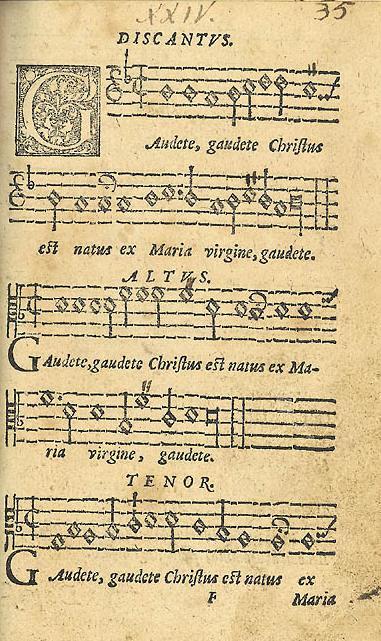
Karen and I only sat down to watch the TV version of Carols from Kings on New Year Eve. A couple of things amazed me about that programme. The first was how Daniel Hyde got the choir to sing so softly in the quiet parts and yet still sound exciting in the loud patches. The other thing was the way the choir members watched. I’ve always thought that a glance at the conductor once every bar was enough. Here the singers glanced at their music once a bar, the rest of the time their eyes were fixed on Daniel Hyde.
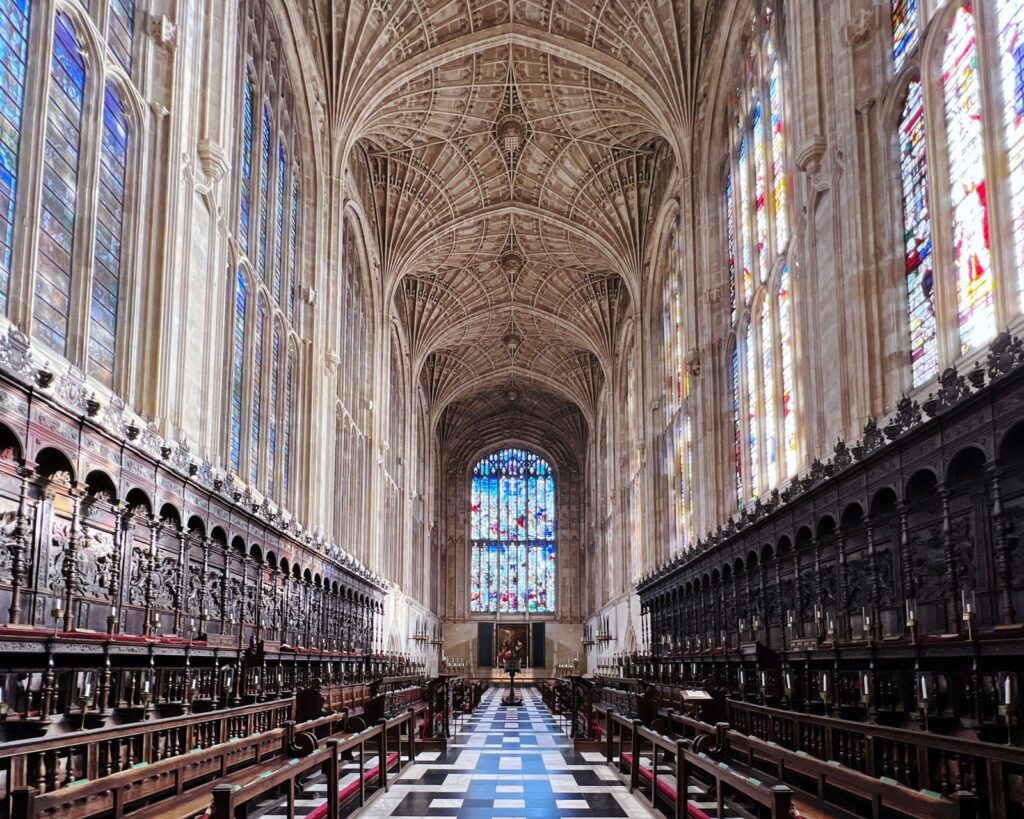
The TV camera operators had numerous ‘arty’ shots of stained-glass windows, the Rueben’s Adoration of the Magi, the soaring columns and the vaulted ceiling. After a shot of the ceiling, I remembered a poem by either William Wordsworth or John Betjieman, who described it as ‘a shower that never falls.’ Being a type five on the Enneagram I had to find which poet it was and in which poem it appeared.
I should have realised that it would most likely be John Betjieman because he was the poet to whom architecture was most important. It appears in a poem entitled Sunday Morning, King’s Cambridge in the collection A few late Chrysanthemums published in 1954.
Sunday Morning King’s Cambridge
By John Betjeman
File into yellow candle light, fair choristers of King’s
Lost in the shadowy silence of canopied Renaissance stalls
In blazing glass above the dark glow skies and thrones and wings
Blue, ruby, gold and green between the whiteness of its walls
And with what rich precision the stonework soars and springs
To fountain out a spreading vault — a shower that never falls.
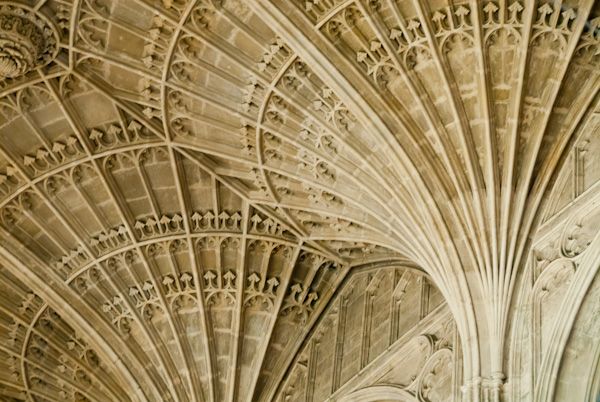 ‘…the stonework soars and springs to fountain out a spreading vault — a shower that never falls.’ Yes, that was the line I remembered and certainly that was what I saw in the TV broadcast – a stone-vaulted ceiling suspended in time and space, frozen for all eternity.
But why did I think it might have been a line from William Wordsworth? Well, he did write about architecture and buildings – vide Lines Composed a Few Miles above Tintern Abbey (July 1798) and the sonnet On Westminster Bridge (Sept 1802) and a little bit of search produced Inside of King’s College Chapel, Cambridge believed to have been written in 1820 or 1821.
Inside of King’s College Chapel, Cambridge
By William Wordsworth
Tax not the royal Saint with vain expense,
With ill-matched aims the Architect who planned—
Albeit labouring for a scanty band
Of white-robed Scholars only—this immense
And glorious Work of fine intelligence!
Give all thou canst; high Heaven rejects the lore
Of nicely-calculated less or more;
So deemed the man who fashioned for the sense
These lofty pillars, spread that branching roof
Self-poised, and scooped into ten thousand cells,
Where light and shade repose, where music dwells
Lingering—and wandering on as loth to die;
Like thoughts whose very sweetness yieldeth proof
That they were born for immortality.
This poem is from a series of 132 sonnets mostly written in 1821 and could have been written, when Wordsworth visited his brother Christopher Wordsworth (Master of Trinity) at Cambridge in 1820. Wordsworth said: “It struck me that certain points in the Ecclesiastical History of our Country might advantageously be presented to view in verse. Accordingly, I took up the subject, and what I now offer to the reader was the result” He was referring to the whole series of 132 Sonnets, which were later known as Ecclesiastical Sonnets.
I love the idea of the vaulted ceiling being like ‘ten thousand cells’ where light and shadow interplay and where music lingers ‘as loth to die’. Wordsworth compares this to thoughts that are born for immortality. Speaking of immortality, some two hundred years later, agreed not immortality, but here I was looking at that same ten thousand-celled stone ceiling with the music of carols still ‘lingering and wandering on as loth to die.’
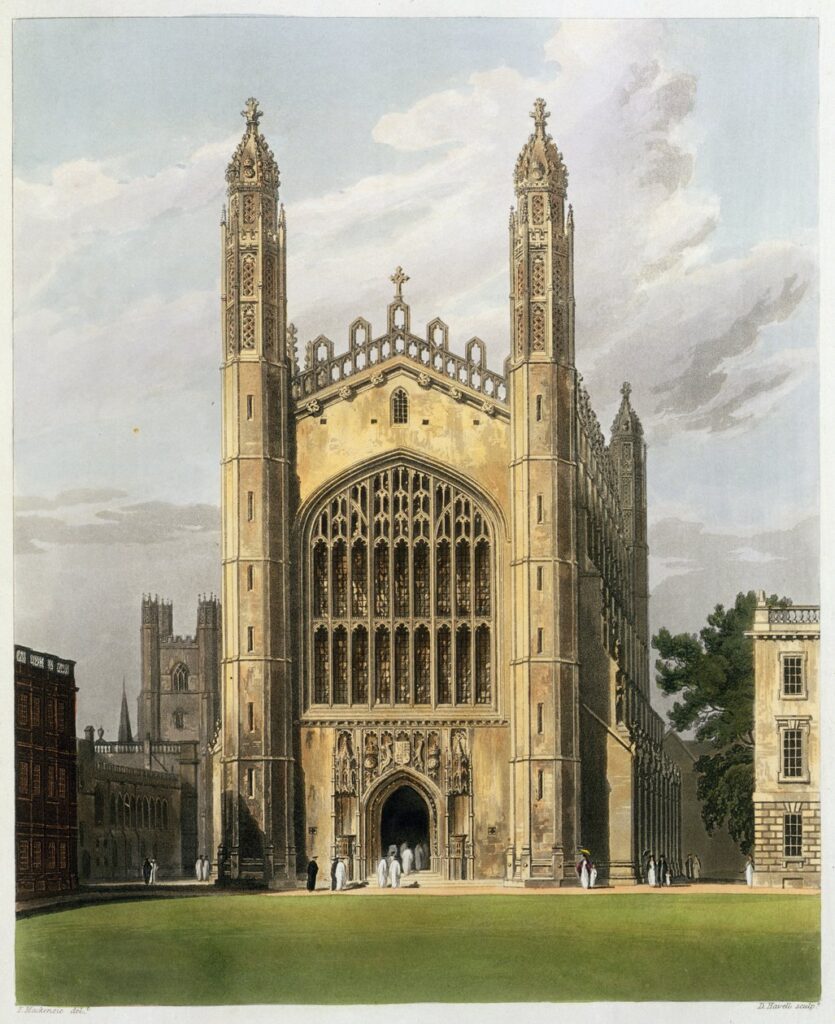
The Chapel at King’s College, Cambridge – like most colleges and their chapels at both Oxford and Cambridge have become a mecca for tourists regardless what time of the year and those Colleges know how to charge those tourist to enter and view the buildings.
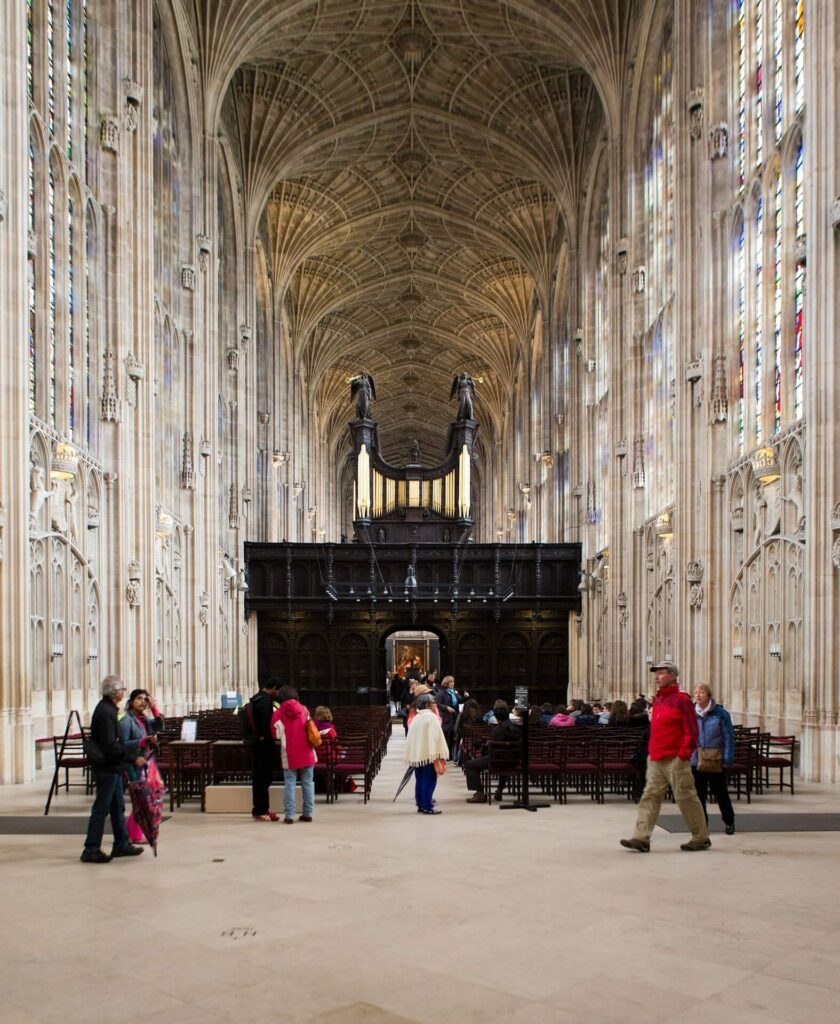
This modern poem Sheena Blackhall expresses how these beautiful buildings have become tourist-traps.
At King’s College Chapel, Cambridge 1
by Sheena Blackhall
A Negress with a knotted, tasselled scarf,
Power-shouldered jacket, buckskin moccasins,
Cromwellian warts on cheek and nose and chin,
Fingers the ancient carvings, clucks in awe.
A girl with matted hair, grown long and blonde,
Like Boudicca with nits, looks nonchalant,
Faced with a raging dragon and a hound.
A skull-faced skulker wearing a baseball cap,
His wrists tattooed with devils and swastikas,
Looks dumb-struck at the chapel’s soaring roof.
In fourteen forty one, the sainted King
Henry the Sixth, laid down the founding stone,
Great walls of buff and cream grew up and up
To vaults like fans of Spanish filigree.
The dark oak screen with gilded organ pipes,
Gifted by Henry eighth and Anne Boleyn.
Workmen in overalls chatter on cell phones,
Move ladders here and there, tape up seat rows.
A girl with thunder-thighs bangs on a pew,
Chews gum and sulks beneath a teacher’s glower.
Rubens’ Adoration of the Magi
Becomes the backdrop of the tourist snaps.
Rupert Brooke’s name, cut into the stone
Reveal he died in war, lost generation.
On Easter Sunday, TV cameras rolled.
No ladder, workmen, tourist queues in view
Only the candlelight’s kind, smudging glow,
The mystery of naked flame in darkness,
As holy as the voices of small boys
Soaring up from their throats like linnets’ prayers.
As I live in Linnet Way in Pinelands, this resonates with me!
—————