Tomorrow shall be my
dancing day.
Each year as Christmas comes round and as choir members start practicing carols, one carol seems to stand out and have a particular effect on me, leading to the desire to explore the words (and music) in more detail.
A few years ago it was John Rutter’s What sweeter music, the words of which were by Robert Herrick (see https://dappergeni.co.za/wp/2021/12/17/christmas-day-reflection-what-sweeter-music-than-a-carol/ ). Last year it was ‘That Chord’ in the organ part of the last verse of O come all ye faithful by David Willcocks. (see https://dappergeni.co.za/wp/2022/12/ )
This year it has become the exciting and very rhythmical setting of Tomorrow shall be my dancing day by John Gardner.
I think I need to look at this carol both from a musical and a text point of view.
Text
Gardener’s setting, like most others sung at Carol Services only uses the first four verses of this carol by an anonymous author.
1. Tomorrow shall be my dancing day;
I would my true love did so chance
To see the legend of my play,
To call my true love to my dance;
Chorus
Sing, oh! my love, oh! my love, my love, my love,
This have I done for my true love.
2. Then was I born of a virgin pure,
Of her I took fleshly substance
Thus was I knit to man’s nature
To call my true love to my dance. Chorus
3. In a manger laid, and wrapped I was
So very poor, this was my chance
Betwixt an ox and a silly poor ass
To call my true love to my dance. Chorus
4. Then afterwards baptized I was;
The Holy Ghost on me did glance,
My Father’s voice heard from above,
To call my true love to my dance. Chorus
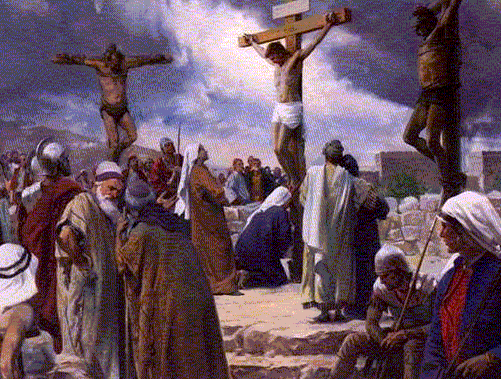
There are, in fact, eleven verses which describe the whole of Jesus life dealing with his temptation in the wilderness (v5), his teaching and miracles (v6), his betrayal by Judas (v7), his trial (v8), his crucifixion (v9), resurrection (v10) and ascension (v11), concluding with the whole purpose of the incarnation: … now I dwell in sure substance/ On the right hand of God, that man/ May come unto the general dance.
Perhaps I need to place this carol into an historical context. Although much older, it appeared in William Sandys Christmas Carols Ancient and Modern published in London by Richard Beckley in 1833. On the internet and on CD liners and introduction to Carol Books there has been much discussion about this carol. But first we need to understand more clearly what a carol is.
One site defined the following: CAROL (0ld French carole), a hymn of praise, especially such as is sung at Christmas in the open air. The origin of the word is obscure. Some suggest that the word is derived from chorus. Others link it with corolla, a garland, circle or coronet, in the earliest sense of the word being apparently a ring or circle, a ring dance. So perhaps we are getting close to Tomorrow shall be my dancing day…
Interestingly, Stonehenge, often called the Giants Dance, was also frequently known as the Carol; thus Harding, Chron. lxx. x.,
Within (the) Giauntes Carole, that so they hight,
The (Stone hengles) that nowe so named been.
The crib set up in the churches at Christmas was the centre of a dance, and some of the most famous of Latin Christmas hymns were written to dance tunes. These songs were called Wiegenlieder in German, noels in French, and carols in English. Strictly speaking, therefore, the word should be applied to lyrics written to dance measures; in common acceptation it is applied to the songs written for the Christmas festival.
Another internet source suggests that according to Christmas Carol legend, all old carols that were written in 3/4 time were written as Creche dances. As these carols were sung, people would dance around the creche or the manger. One of the most famous Creche songs is “Away in a Manger”.
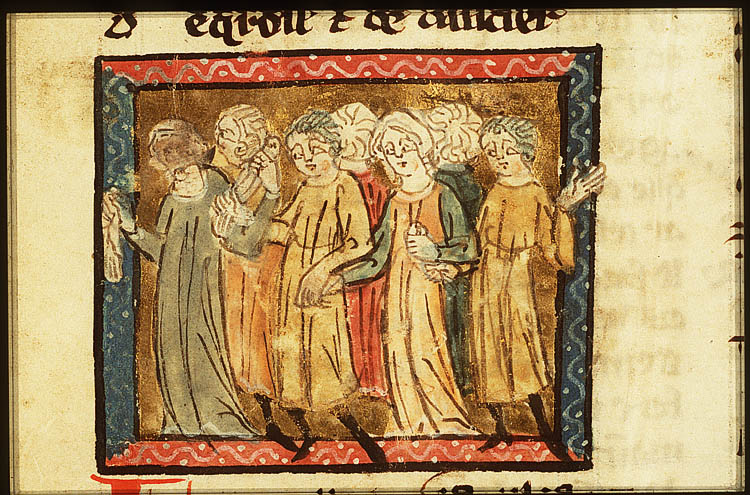
Thus, the idea is that Tomorrow shall be my dancing day is a carol that one can dance to. “Dancing Day” in the text is a reference to the dance around the creche, or dancing on the birthday of Christ. Notice that the speaker/singer of the text is Christ. There is a suggestion that line “To see the legend of my play,” could be a reference to a mystery play and just like the Coventry Carol, this could have been derived from a mystery play. The actor playing Christ singing the verses while the audience would join in with the chorus. Sing, oh! my love, oh! my love, my love, my love, /This have I done for my true love. This creates a delightful image of Christ viewing humankind as his ‘true love’ for whom he was willing to come to earth and go through what the next ten verses describe so well.
Each line of verse one needs a brief explanation:
Tomorrow shall be my dancing day; Sung at Christmas so Christ would start dancing/ be born the next day or perhap speaking about the end of time?
I would my true love did so chance ‘My true love’ is humankind or perhaps the church – depending on one ecclesiology.
To see the legend of my play, Legend could be story and play could be life or a hint at being part of a mystery play.
To call my true love to my dance; Christ life was to call us – humankind’ to join him in the ‘dance’
The other three verses are more directly descriptive, even if the language is a bit stilted in old-fashioned English. I have already mentioned the last line: “that man may come unto the general dance.” and how this wonderfully summarises the incarnation.
Music
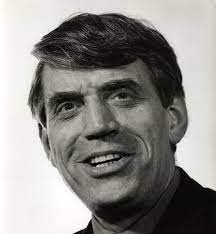
I said above that carol tunes that were in 3/4 time were for dancing. The original ‘Traditional’ tune as it appears in Sandy’s Carols Ancient and Modern is in 3/4 time but in a fairly legato style. John Gardner (1917 – 2011) has written a completely different tune from the original. It has a drum and cymbal accompaniment in the opening and in between the verses with staccato chords on the organ. The verses and choruses are sung unaccompanied. The staccato and dance rhythms make it a very exciting carol to hear.
Here is the carol sung by the Portsmouth Cathedral Choir under the direction of Dr David Price. It is from the CD, Verbum Caro Factum Est: Advent and Christmas from Portsmouth from Herald HAVPCD 407.
Tomorrow shall be my dancing day by John Gardner.
Why did I like this Carol?
The use of the image of dance, of love and the idea of Jesus addressing us directly relating his life (‘dance’) to us and asking us to join in the dance, is a wonderful way of evangelising without bible-bashing and that last line of verse eleven hoping that ‘Man may come under the general dance’ — Thus ‘the general dance’ is revealed to be not only our earthly life with Christ but also the heavenly wedding banquet—as well the literal dance that may have accompanied the finale of the mystery play. The whole concept of the image of dance in religion is the next thing I need to explore!
Musically, its rhythm is what attracted me to this tune. It is vibrant and exciting and certainly makes me, not so much want to dance, but to join in the drum beats by stamping or beating time on the pew in front!
The complete text.
1. Tomorrow shall be my dancing day;
I would my true love did so chance
To see the legend of my play,
To call my true love to my dance;
Chorus
Sing, oh! my love, oh! my love, my love, my love,
This have I done for my true love
2. Then was I born of a virgin pure,
Of her I took fleshly substance
Thus was I knit to man’s nature
To call my true love to my dance. Chorus
3. In a manger laid, and wrapped I was
So very poor, this was my chance
Betwixt an ox and a silly poor ass
To call my true love to my dance. Chorus
4. Then afterwards baptized I was;
The Holy Ghost on me did glance,
My Father’s voice heard from above,
To call my true love to my dance. Chorus
5. Into the desert I was led,
Where I fasted without substance;
The Devil bade me make stones my bread,
To have me break my true love’s dance. Chorus
6. The Jews on me they made great suit,
And with me made great variance,
Because they loved darkness rather than light,
To call my true love to my dance. Chorus
7. For thirty pence Judas me sold,
His covetousness for to advance:
Mark whom I kiss, the same do hold!
The same is he shall lead the dance. Chorus
8. Before Pilate the Jews me brought,
Where Barabbas had deliverance;
They scourged me and set me at nought,
Judged me to die to lead the dance. Chorus
9. Then on the cross hanged I was,
Where a spear my heart did glance;
There issued forth both water and blood,
To call my true love to my dance. Chorus
10. Then down to hell I took my way
For my true love’s deliverance,
And rose again on the third day,
Up to my true love and the dance. Chorus
11. Then up to heaven I did ascend,
Where now I dwell in sure substance
On the right hand of God, that man
May come unto the general dance. Chorus
Sources used:
https://en.wikipedia.org/wiki/Tomorrow_Shall_Be_My_Dancing_Day
http://www.hymnsandcarolsofchristmas.com/Hymns_and_Carols/tomorrow_shall_be_my_dancing_day.htm
And numerous other bloggers who wrote about this carol