
Gospel Reading
Luke 1:39-45
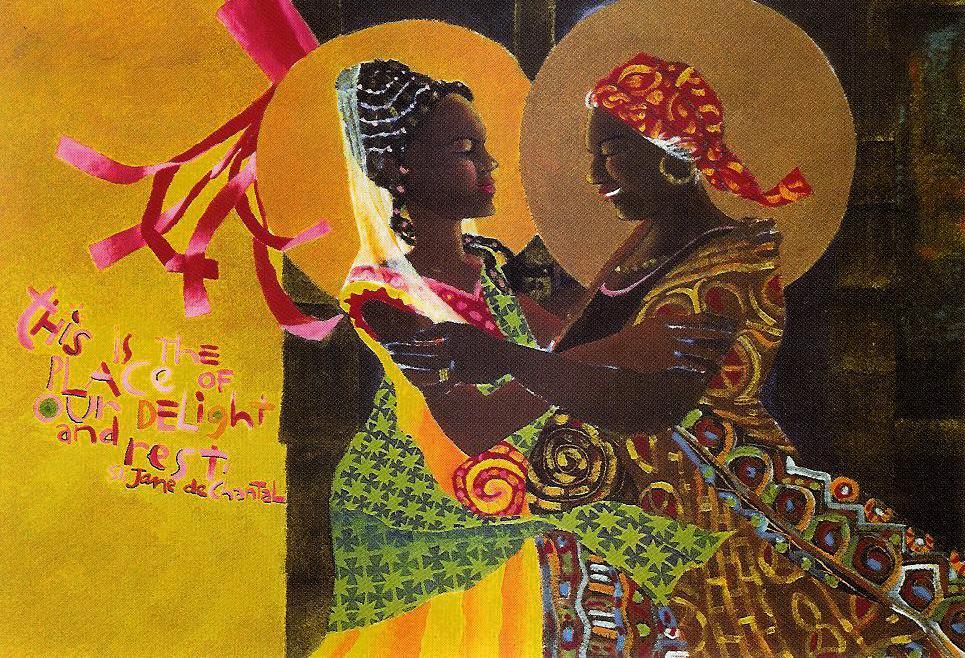
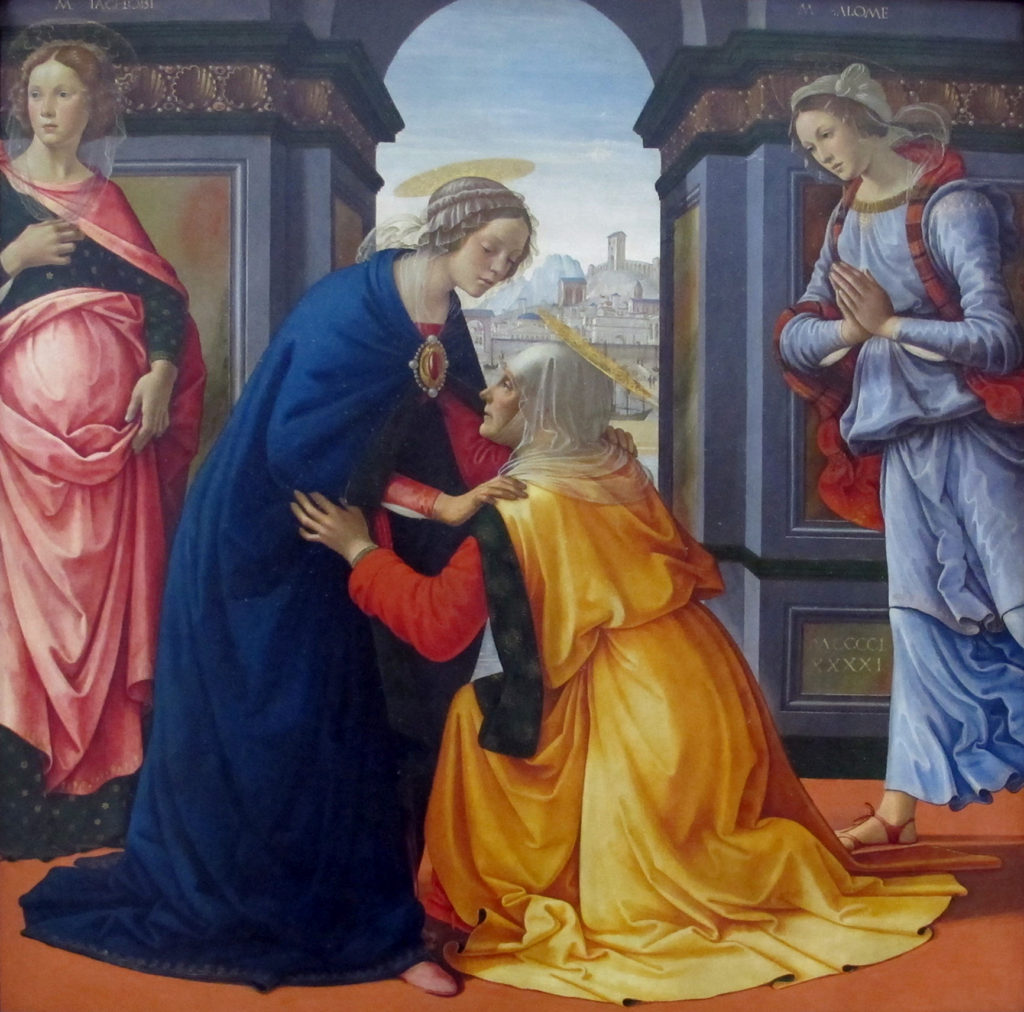
39 In those days Mary set out and went with haste to a Judean town in the hill country, 40where she entered the house of Zechariah and greeted Elizabeth. 41When Elizabeth heard Mary’s greeting, the child leapt in her womb. And Elizabeth was filled with the Holy Spirit 42and exclaimed with a loud cry, ‘Blessed are you among women, and blessed is the fruit of your womb. 43And why has this happened to me, that the mother of my Lord comes to me? 44For as soon as I heard the sound of your greeting, the child in my womb leapt for joy. 45And blessed is she who believed that there would be a fulfilment of what was spoken to her by the Lord.’
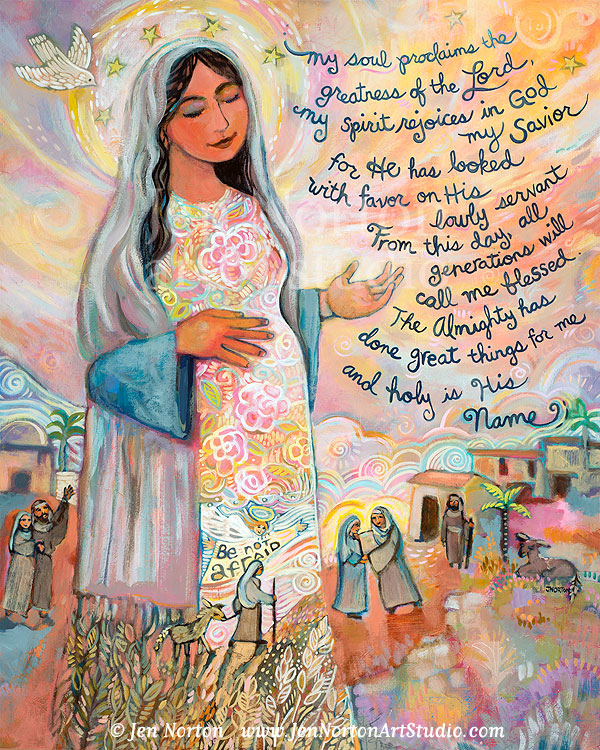
46 And Mary said,
‘My soul magnifies the Lord,
47 and my spirit rejoices in God my Saviour,
48 for he has looked with favour on the lowliness of his servant.
Surely, from now on all generations will call me blessed;
49 for the Mighty One has done great things for me,
and holy is his name.
50 His mercy is for those who fear him
from generation to generation.
51 He has shown strength with his arm;
he has scattered the proud in the thoughts of their hearts.
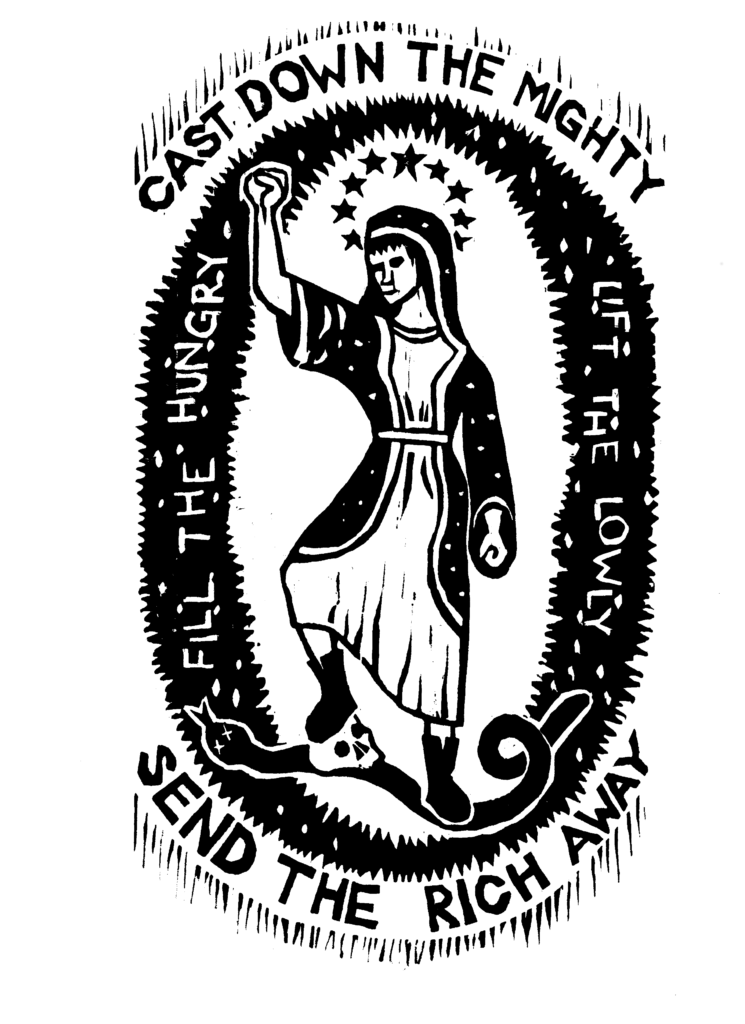
52 He has brought down the powerful from their thrones,
and lifted up the lowly;
53 he has filled the hungry with good things,
and sent the rich away empty.
54 He has helped his servant Israel,
in remembrance of his mercy,
55 according to the promise he made to our ancestors,
to Abraham and to his descendants for ever.’
Reflection

Last Wednesday Karen and I became grandparents for the second time with the birth of a baby sister for Elias. On Sunday we visited the new baby, just named Astrid Shiloh [meaning ‘divine strength’ and ‘peace’]. I was amazed at this tiny (just over three kilogram) bundle, with her perfectly formed little fingers, toes and ears. Yes, I’m sounding like a soppy old granddad but I am also now realising, a little bit, how Elizabeth must have felt when Mary visited her.
This event has also made me think, how did Luke know about a baby leaping in Elizabeth’s womb? How did he know what it felt like for her to be able to speak about it as she does in this Sunday’s Gospel reading? Afterall he was a man, so what did he know about babies in the womb and what did he know about expectant mothers’ emotional feelings when the baby moves – or leaps, if you like – in the womb? Agreed, Luke was a doctor so maybe he had a better understanding than the other Gospel writers Matthew, Mark or John.
I decided to try and find out what the scholars thought about this ‘leap’. I used the internet to do some research. Those who know me will know this is my go-to place for information, which I am aware is not always accurate. The first site I found used this verse of John the Baptist leaping in Elizabeth’s womb to condemn abortion – an area I am going to avoid as it needs a long-considered response and not a quick throw-away few lines, a week or two before Christmas. Another site’s approach was to get all technical, discussing the actual meanings of the original Greek words used by Luke. I always find these discussions interesting but often ask at the end of this sort of exegesis, “How has this interesting knowledge changed my life?” But let’s look at it anyway.1
The Webpage starts by saying ‘The Greek here for “womb” (koilia) actually means “belly” or “stomach.”’ Yes, I was wondering when it was that doctors realised babies were born in the womb and not in a mother’s belly or stomach. I’m sure it was well after Luke wrote his Gospel. The website goes on to say that ‘koilia‘ was also the word used in the Greek translation of the Old Testament Book of Genesis where the snake is punished and made to walk on its belly. The website then triumphantly says “snakes don’t have wombs” but begrudgingly admits that “womb” is still a reasonable translation. ‘And certainly, we know that the “child” was in the womb, not some other part of Elizabeth’s anatomy, even if the original text was less clear.’ Yes, but did the writer of the Gospel, Luke, know that? Is womb a modern word placed in this context to satisfy modern thought? And does it matter, I wonder?
This website’s author obviously believes we should take the Bible literally and goes on to say the Greek word used here for “child” (brefos) refers to literally an infant, but, just as the shift from “stomach” to “womb,” is acceptable, we too can accept “child” instead what the author thinks should be translated as “foetus.” Obviously, the website author has no poetry in him (and I suspect it is a ‘him’). He wants medically accurate translations. But once again is the author trying to use contemporary medical accuracy to criticise the translation of the anachronistic Greek words used in the NRSV?
The next subject tackled is the leaping? ‘What was this child or infant or foetus doing?’ the author asks. In this case the Greek word used is skirtao. We are told that the Greek verb is used elsewhere in the bible but only in only two contexts: figuratively, and dealing with children in the womb (though the author prefers ‘foetuses in the womb’). In Greek version of the Old Testament, skirtao is used in Genesis 25:22 where Rebekka’s twin children ‘struggled together within her.’ So skirtao used here, is ‘struggle’. But it is used in more poetic and figurative ways as well – as in the Psalms e.g. Psalm 114 where it is the mountains that ‘skip’; in Malachi 3:20, those who revere God’s name shall ‘leap’ like calves; in Jeremiah, plunderers ‘frisk about’ like a cow; and in Luke 6:23, God’s chosen should rejoice and ‘leap for joy.’ All of these examples use the Greek word skirtao. Very scientifically the author says that it looks like “leap” is only one possible translation but he would prefer ‘moved in the way that foetuses do’. Then he does open up to the poetic sense by saying that maybe ‘leaped’ could be seen in the same metaphoric sense of the English phrase, ‘leap for joy’ which indicates joy but not necessarily actual leaping (Hello!).
All of this is super-interesting but have the last thirty-odd lines added anything to my/your spiritual well-being? Have they brought us closer to God? Which is something I felt with the birth of our granddaughter, Astrid Shiloh. As I’ve already said, I seemed to be connected somehow to that tiny bundle of babygrow and living-and-breathing-flesh held in my daughter’s arms. This bundle also seemed to connect me closer to God. Seeing both my daughter sitting quietly with Astrid, looking down at this miracle that she had brought forth from her womb and our son-in-law holding tiny Astrid gently in his arms, I realised that family trees were not merely names and dates joined by lines on a piece of paper but real living people.
In the same way there is in the Gospel reading an energetic harmony that joins John and Jesus from the very beginning. Bruce Epperly2 says that they were spiritual soul friends, bound by God’s vision, from the very beginning. Certainly, they were both conceived in a remarkable way and both destined to become world-changers by the message they brought. Today, we know from our scientific research that foetuses are aware of their environment, and are shaped by the emotional and environmental lives of their parents. There are CDs especially compiled with the right music to keep the unborn foetus calm and peaceful. Foetuses can ‘know’ each other by an energetic field and they feel encouraged and uplifted in utero by loving parents and communities. This passage also reminds us to love the children living in our midst. With the birth of our granddaughter at this time I found this Sunday’s reading more meaningful than in previous years.
At the same time, our granddaughter’s birth has occurred at what we all hope is the last dying surges of the COVID virus. I mentioned last week the four words of Advent.3 This week’s word is Hell. For many it might be like hell if they have to say farewell to loved ones without actually being in contact with them, without holding them or hugging them. There is so much of the World that needs to change and the last part of our Gospel (used in what I think is an inappropriate place in the service to replace the Psalm) is Mary’s Magnificat. This wonderful song given in Luke’s gospel, provides an image of hope for the vulnerable and oppressed, for those suffering because others refuse to change. Mary’s hymn speaks of a world turned upside down. The poor will become affluent and the affluent will lose their fortunes, the powerful will be dethroned and ordinary people will take the reins of power. This is an impossible dream for so many citizens of our own land, as privileged South Africans gain more and more power and wealth. But it is more than that. The Magnificat is a dream that tells us that our current situation fails the test of divine affirmation. Homelessness, unemployment, and economic instability, must provoke an uneasy conscience in us, especially among the powerful, whose wealth is built upon the poverty of others.

Can we dream of a new era for humankind? Mary could. The fruitions of her hopes start at Christmas, when someone is born that will mobilize our hopes and hands to change the world that God loves. May the hope Mary spoke about come to fruition in the lifetime of Elias and Astrid.
Magnificat in B flat by Sir Charles Villiers Stanford (1852-1924) sung by the Choir of Durham Cathedral with Keith Wright, Organist and James Lancelot, Director.
- It is found at https://goddidntsaythat.com/2015/09/24/whats-this-leaping-in-luke-141/ [↩]
- https://www.patheos.com/blogs/livingaholyadventure/2015/12/the-adventurous-lectionary-fourth-sunday-of-advent-december-20-2015/ [↩]
- https://dappergeni.co.za/wp/2021/12/10/advent-3-joy-of-heaven-right-here-right-now/ [↩]

Beautiful. 🙏. And hearty Congratulations to you, Karen Kate and family. Gorgeous children.. Enjoy them.. They grow so quickly..