
Preached at St George’s Cathedral, Cape Town
May I begin by thanking Dean Michael Weeder for inviting me to be the preach on this Advent Sunday the first Sunday of the liturgical year. Many priests complain that once they retire, they are often forgotten about, so thank you, Father, for this invitation to preach this morning.

I wonder how many of you are old enough to remember the Cuban Missile Crisis of 1962? The Soviet leader, Nikita Khrushchev wanted to place a guided missile base on the island of Cuba. President J. F. Kennedy sent the US Navy to force the Russian cargo ships carrying the missiles to turn back. I was in Std 4 or Grade 6 as they call it today and I remember watching my classmates during the lunch break kicking a football around and I thought, “How can they do that, when the world could end in nuclear conflict at any moment?” But, of course, it didn’t.
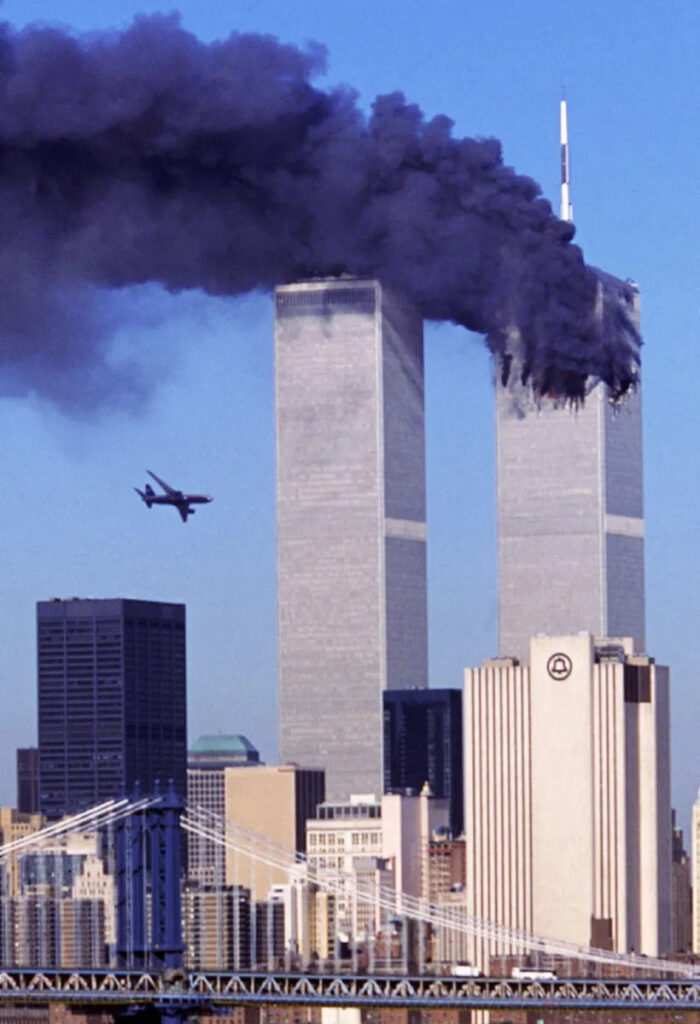
Perhaps more of you remember Nine-Eleven. Where were you on the 9th of September 2001 when the two planes crashed into the World trade Centre. I was fetching our children from school and I heard about the first plane crashing into the first tower on the car radio and we were home in time see the terrible sight of the second plane flying into the second tower and later watched in horror as both towers collapsed. At the time I wondered what the consequences would be. Would the world as we knew end?
I wonder if our children and grandchildren will ask us where we were when the Hamas fighters entered Israel and killed and kidnapped Israeli citizens? This particular earth-shattering event has yet to be fully resolved. Will our children and grandchildren ask us in 20- or 30-years’ time what side did we support?
Why am I mentioning these earth-shattering events in my sermon today on Advent Sunday? Well, because these were the kind of events that Jesus was talking about in our Gospel reading from Mark 13. Earth-shattering, world-changing events. Jesus used language like, the sun will be darkened, and the moon will not give its light, and the stars will be falling from heaven, and the powers in the heavens will be shaken. Many Christians see this passage as being about the so-called “end of the world,” and they have through the ages searched their Bibles for other clues about when that might be. I’m sure we have all smiled slightly cynically when the actual day they predicted passes and the world is still going.
Recently biblical scholars have challenged the end-of-world way of reading this passage. They do so for at least two reasons. First, a good Jew has a faith in God that is anchored in the goodness of Creation, and that the Creator God would never abandon it, so Jews like Jesus, wouldn’t have thought in terms of a literal ending to that creation. Rather they thought in terms of its redemption, its salvation, its being fulfilled and completed.
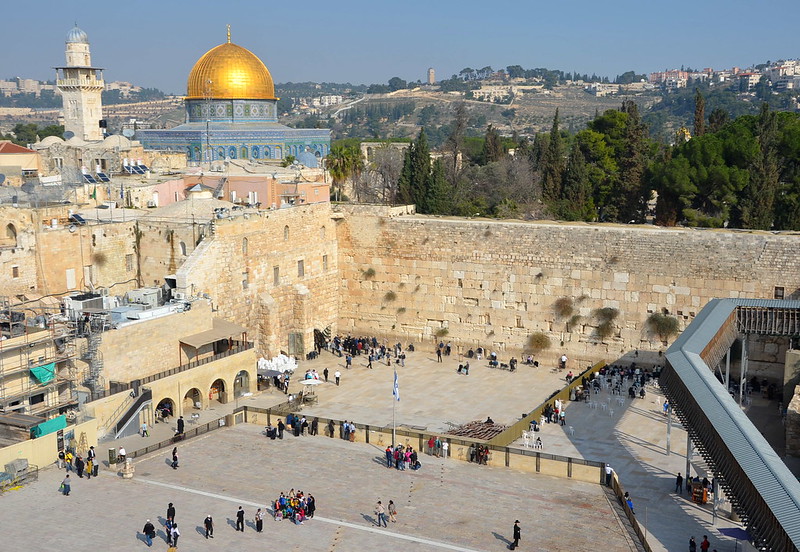
Secondly, earth- shattering and end of the world type of language had been used in the past by the prophets in the Old Testament but did they literally mean that the world would end or the earth be shattered? Earlier in this chapter Jesus predicts the destruction of the Jewish Temple. This is something that truly happened within a generation of Jesus’ crucifixion. It came at the end of the Roman-Jewish War in the years 66-70 AD. The Roman army had laid siege to the city of Jerusalem and the climax of that war brought the city’s destruction and the end of the Temple. For the Jews, the temple was the centre of their religion and their way of life. So, these events truly were earth-shattering for them. Their lives as a people would never be the same. Two thousand years later, the Temple mount in Jerusalem is still empty of a Jewish Temple, but continues to be the centre of political turmoil.
Perhaps personally we can identify more with our first reading from Isaiah which is a cry in the face of turmoil – a turmoil like the ‘end-of-the-world’ or ‘earth-shattering’ turmoil we are living through right now. This passage is a community lament; notice the use of the pronoun ‘we’ in verse 6. The community shout out to God: O that you would tear open the heavens and come down!” It is the anguished outburst of a desperate people, having exhausted all possible human alternatives, having given up on polite, respectfully restrained prayers to God. Now they cry, “Tear open the heavens and come down!” Basically, they are asking “Where are you, God? Where are you?” This is the prayer of a people who long for God, yet cannot see or hear God, people for whom God is absent.
We all know what that feels like. Have you ever prayed, but felt like you were only talking to yourself? Have you experienced your own personal earth-shattering moment, after which your personal world would never be the same? Have you ever stood by the bed of a loved one in pain, and prayed to God for help, but felt like God was far away? Have you known Isaiah’s prayer: ‘God, where are you? Tear open the heavens and come down! Please come!’ This is our Advent prayer, as we live in the relative darkness of our current time. We join in our Advent call “Come, Lord Jesus, come.”
The question is, will Christmas bring an answer to that prayer? We celebrate God’s coming in Jesus on Christmas. But will he come again this year? Will he come to those who sit in darkness who yearn to see a great light? At Christmas we celebrate that Christ has already come, that a great light has come to shine in the darkness and the darkness cannot overcome it. But how does that make a difference to those who sit in darkness right now? The Good News is this: Since Christ has already come, we now know where to look. More specifically, we know to look in the unexpected places. Think of the Christmas story: the saviour of the world, the king of creation, is born to two poor people in a barn in tiny Bethlehem. Is that where you would expect God to come? Not really. And it never really changes with this Jesus. He was always where we least expect him. And, finally, it ended with him on a cross, the very last place anyone would have expected to find God coming into this world. So, when we pray the prayer, “Where are you God?” perhaps what we need to be reminded of is where to look. Perhaps when we can’t find God, it’s because we are looking in the wrong places.
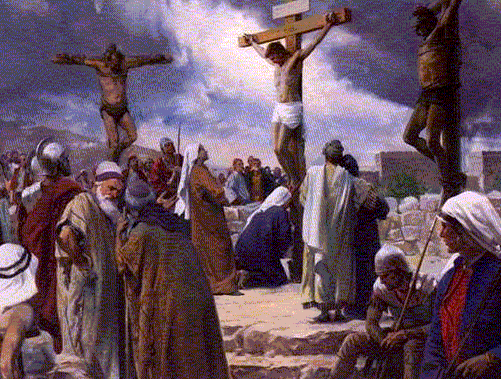
George Macleod, the founder of the Iona Community, seems to answer the question ‘Where is God?” when he wrote, “I simply argue that the cross be raised again at the centre of the marketplace as well as on the steeple of the church. … Jesus was not crucified in a cathedral between two candles, but on a cross between two thieves; on the town garbage heap; at a crossroads so cosmopolitan that they had to write his title in Hebrew and in Latin and in Greek . . . at the kind of place where cynics talk smut and thieves curse, and soldiers gamble. Because that is where he died. And that is what he died about.”
In Jesus we begin to see that the answer to “Where is God?” is precisely this: God is with those who suffer. God is with us when we suffer. That’s where God is. In Jesus we learn where to look for God.
And this is where our salvation itself lies: learning where to find God. The problem with humankind is that we have been looking for God in the wrong places. We have tended to look for God among the powerful and mighty. ‘It’s someone with great power, who will get us out of this mess!’ is what we are usually tempted to think. But, no, it’s those same people of great power who all too often are responsible for the suffering in the first place.
In Jesus, we learn to see differently. When we look to the cross, we learn to see that God is with those who suffer, and has been all along. As long as there is suffering in this world, that is where God will be. And here’s the most important question: when we learn to find God in human suffering, and go to be with God there, then won’t the suffering finally end? If everyone learns to find God, and to be with God, among the suffering, then who will be left to cause the suffering?

This Advent, as we prepare for Christmas and Christ’s coming once again, where will we look to find him? We pray for peace, and hope that there will be no earth-shattering events, though we can never know the day or the time. So we are awake and ready because we know where to look for and find Christ again this year: among the needy, among the suffering, among the victims of war and terror. May our Advent preparations also take us to where we are most sure to find the baby Jesus. And that way we will find ourselves working for peace, working for that promised day when there will be no more suffering.
Amen.
Based on a sermon preached by Paul J. Nuechterlein on the Girardian Lectionary website.
